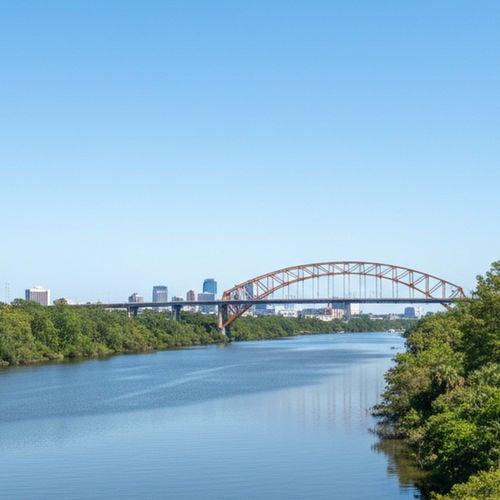

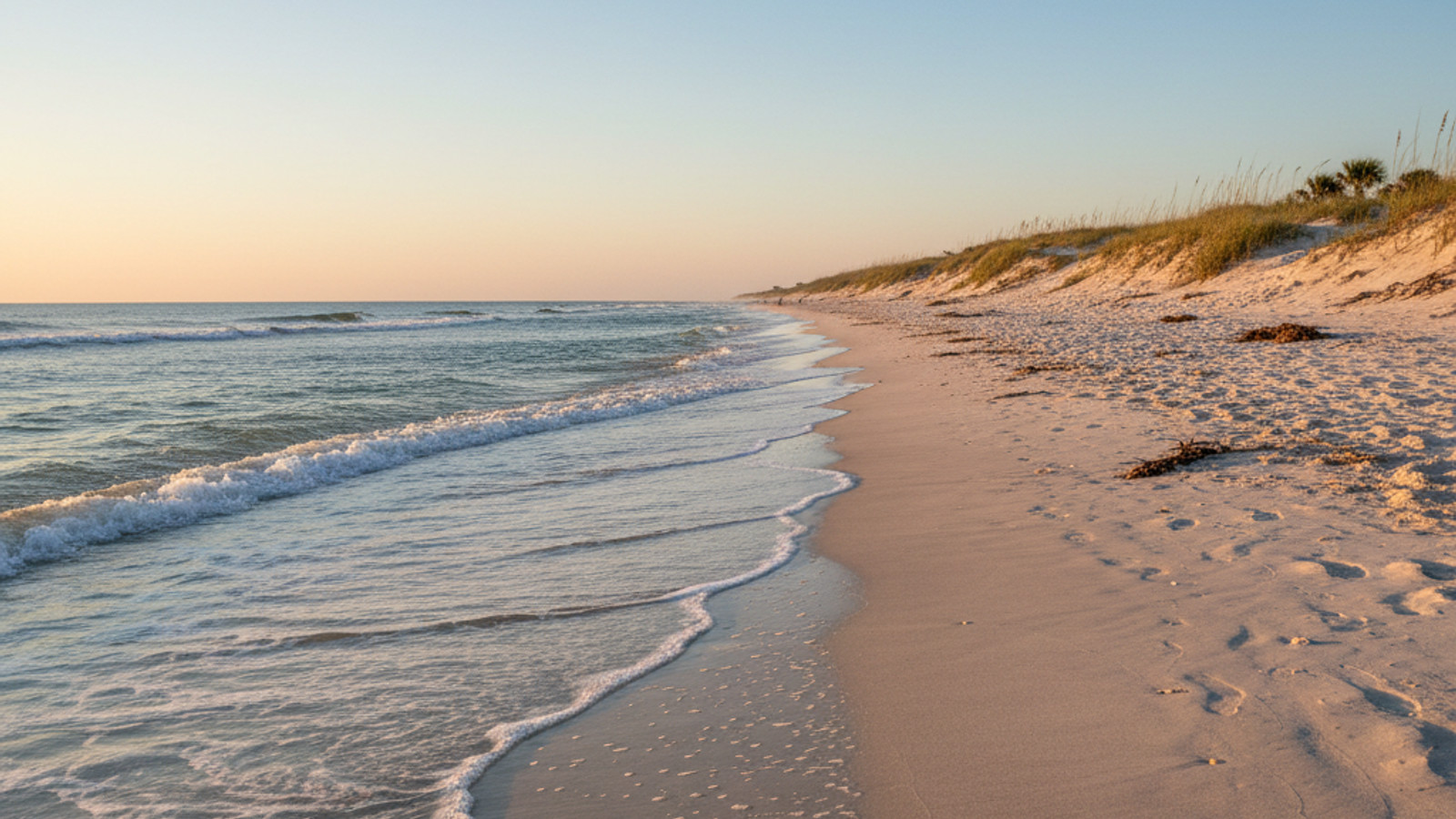
If you are looking into relocating to Northeast Florida, you have likely narrowed your search down to two main contenders: the sprawling metropolis of Jacksonville and the historic, coastal charm of St. Augustine.
On a map, they look like neighbors. In reality, they are about 40 miles apart, and the lifestyle difference between the two is massive. I talk to buyers all the time who feel torn between the affordability and job market of Jacksonville (Duval County) and the top-rated schools and vacation-vibes of St. Augustine (St. Johns County).
There is also a "hybrid" option that many locals choose: living in the northern part of St. Johns County to get the best of both worlds. Your final decision usually comes down to three specific factors: your housing budget, your tolerance for a daily commute, and your priorities regarding school districts.
Let’s break down the real differences so you can decide which spot on the First Coast feels like home.
Lifestyle & Vibe: Urban Sprawl vs. Historic Charm
The daily "feel" of these two cities couldn't be more different. When you are deciding where to live, you are really choosing between a bold, modern city and a relaxed, historic town.
Jacksonville: The "Bold City" Energy
Jacksonville is the largest city by land area in the continental U.S., which means it feels huge. It has a distinct industrial and corporate energy, anchored by the St. Johns River flowing right through downtown. Life here is defined by distinct neighborhoods. You have the artsy, historic vibes in Riverside and Avondale, the booming business centers on the Southside, and the laid-back culture at the beaches.
It also feels like a "real" city. You have the Jacksonville Jaguars (NFL), major concert venues, an international airport, and a diverse job market ranging from finance to healthcare logistics. It is busy, it is spread out, and you will definitely need a car to get anywhere.
St. Augustine: The "Old City" Charm
St. Augustine moves at a completely different pace. As the nation's oldest city, the historic downtown is incredibly charming, filled with Spanish colonial architecture, cobblestone streets, and boutique shopping. However, it is also a major tourist hub. Living here means sharing your downtown with trolleys and vacationers, especially on weekends and holidays.
Outside of the tourist distinct, St. Augustine feels like a small, coastal town. It is slower, greener, and heavily focused on the water. If you want a lifestyle that feels like a permanent vacation—where the pace is slow and the dress code is flip-flops—this is it. The trade-off is that you won't find the same density of big-city amenities or high-paying corporate jobs right in your backyard.
Cost of Living & Real Estate Market
For many buyers, the decision is made right here in the numbers. There is a significant "sunshine tax" attached to St. Augustine addresses compared to their neighbors to the north.
Jacksonville (Duval County)
Jacksonville remains one of the most affordable major coastal cities in the country. The inventory here is incredibly diverse. You can find historic bungalows, riverfront estates, and affordable starter homes.
As of early 2026, the median home price in Jacksonville hovers around $303,000. That affordability allows buyers to get much more square footage for their money. If you are looking for homes for sale in Jacksonville, you will generally find that your dollar stretches further here than almost anywhere else in Florida.
St. Augustine (St. Johns County)
St. Johns County is a premium market. Because of the high demand for the lifestyle and schools, combined with land scarcity near the coast, prices are significantly higher. The median sale price in the St. Augustine and St. Johns area is often between $475,000 and $500,000.
For comparable single-family homes, you are often looking at a price gap of $150,000 to $200,000 just for crossing the county line.
A Note on Taxes
It is worth noting that while home prices are higher in St. Johns County, the property tax millage rate (the tax rate per $1,000 of value) can sometimes be lower than in Duval. However, because the assessed value of the homes is so much higher in St. Augustine, your actual annual tax bill will likely still be higher than it would be for a similar home in Jacksonville.
The "In-Between": Why St. Johns County is the Hotspot
If you are looking at a map, you might think the choice is binary: Downtown Jax or Downtown St. Augustine. But the most popular area for relocation right now is actually the suburban space between them.
Many addresses that say "St. Augustine" are actually located in northern St. Johns County, 15 to 20 miles north of the historic district. This includes master-planned communities like Nocatee, Julington Creek, and Durbin Crossing.
This area is the "sweet spot" for many professionals. It offers newer construction and access to St. Johns County schools and amenities, but it significantly cuts down the commute time to Jacksonville employment centers. You aren't really living in the "Old City," but you are enjoying the benefits of the county. This region has blurred the lines between the two cities, essentially functioning as a high-end suburb of Jacksonville with a St. Augustine zip code.
Schools & Education: Duval vs. St. Johns County
For households with school-aged children, this is often the single biggest factor driving the move to St. Augustine.
St. Johns County
The St. Johns County School District is consistently ranked #1 or #2 in the entire state of Florida. It is an "A" rated district across the board. The consistency of the schools—from elementary through high school—is a major draw. Relocating families often feel comfortable buying a home anywhere in the county knowing the zoned school will likely be highly rated.
Duval County
Duval County is a much larger, more complex district generally rated as a "B" district. However, broad ratings don't tell the whole story. Duval has incredible pockets of excellence, including magnet schools like Stanton College Preparatory School, which is often ranked as one of the best high schools in the nation.
The difference is consistency. In Duval, you often need to be more strategic about which neighborhood you choose or navigate the magnet lottery system to find the right fit. In St. Johns, the high performance is more uniform across the county.
The Commute: Reality of Living in St. Augustine and Working in Jax
If you work in Jacksonville but fall in love with a home in St. Augustine, you need to be realistic about the drive.
The distance between the two city centers is roughly 40 miles. On a clear Sunday morning, that is a breezy 45-minute drive down I-95. During rush hour, it is a different story.
The I-95 Grind
I-95 is the main artery connecting the two. Traffic can be heavy, and accidents frequently cause slowdowns. A standard commute during peak hours can easily push to 60 minutes or even 1 hour and 15 minutes one way.
Route Options
Your alternative is US-1 (Philips Highway), which is more scenic but loaded with traffic lights, making it much slower.
If you have a hybrid work schedule—perhaps commuting only two or three days a week—living in St. Augustine becomes much more viable. But if you have to be in a downtown Jacksonville office five days a week at 8:00 AM, you need to decide if spending two hours a day in the car is worth the lifestyle trade-off.
Beach Showdown: Jacksonville Beach vs. St. Augustine Beach
Both cities offer incredible access to the Atlantic Ocean, but the beach culture is distinct in each.
Jacksonville Beaches
The main hubs here—Jacksonville Beach, Neptune Beach, and Atlantic Beach—are more urban. You have a higher density of bars, restaurants, and nightlife right on the ocean. The sand here is hard-packed and flat, making it famous for beach cruisers (bicycles) and running. It’s an active, energetic beach scene with great surfing.
St. Augustine Beaches
St. Augustine Beach, Vilano Beach, and the coastline along Anastasia State Park offer a more natural, scenic vibe. The dunes tend to be higher, and the atmosphere is more relaxed.
A unique feature of St. Johns County is how accessible beach driving is. While there are small zones for this in Duval, St. Johns has miles of designated shoreline where you can pay a toll, drive your 4x4 right onto the sand, and set up your tailgate for the day. It’s a classic part of the local culture.
Final Verdict: Which City is Right for You?
Choosing between these two really comes down to what season of life you are in and what you value most in your daily routine.
- Choose Jacksonville if: You want maximum affordability, a shorter commute to work, diverse neighborhood options, and an urban environment with big-city amenities.
- Choose St. Augustine if: You prioritize top-rated schools, historic charm, beach driving, and a slower pace of life, and you are willing to pay a premium for housing.
- Choose the "In-Between" (Northern St. Johns) if: You want the school district and new construction benefits of St. Johns County but need easier access to Jacksonville for work or travel.
Frequently Asked Questions
Is it cheaper to live in Jacksonville or St. Augustine?
Jacksonville is significantly cheaper regarding housing costs. The median home price in Jacksonville is roughly $150,000 to $175,000 less than in St. Augustine and St. Johns County, and everyday costs like groceries and utilities are generally comparable.
How far is the commute from St. Augustine to Jacksonville?
The physical distance is about 40 miles, which takes 45 to 50 minutes in light traffic. However, during weekday rush hours, you should plan for a commute of 60 to 75 minutes each way, primarily along the I-95 corridor.
Are St. Johns County schools better than Duval County?
Statistically, St. Johns County schools consistently rank higher, often holding the #1 or #2 spot in Florida state rankings. While Duval County has excellent magnet programs and specific high-performing schools, St. Johns County offers higher average ratings across the entire district.
Can you drive on the beach in both cities?
Yes, but the access differs. St. Johns County (St. Augustine) offers widespread beach driving access with many entry points along the coast. Jacksonville allows beach driving only in very specific, limited zones, mostly around Huguenot Memorial Park, while the main residential beaches are pedestrian-only.
Check out this article next