
Relocating to Northeast Florida often presents buyers with a fundamental geographic choice. You have to decide between the massive, sprawling footprint of the inland city and the distinct coastal municipalities situated along the Atlantic Ocean.
Understanding the functional differences between these two areas is essential for making a sound real estate investment. While they share a county and a broader regional identity, the day-to-day logistics, housing costs, and property tax structures vary significantly.
The Core Differences Between Jacksonville and Jacksonville Beach
Jacksonville holds the title of the largest city by land mass in the contiguous United States, covering over 800 square miles. This vast inland metropolis is anchored by the St. Johns River, featuring a high-density downtown core surrounded by diverse commercial hubs and extensive suburban development.
The sprawling nature of the inland city means it encompasses diverse districts like the historic Riverside area and the commercial hubs of the Southside. This vast footprint requires residents to frequently utilize the interstate system for daily errands.
In contrast, Jacksonville Beach is a distinct, smaller municipality located approximately 15 to 18 miles east on San Pablo Island. It operates with its own local government and maintains a much denser residential layout focused heavily on a walkable coastal strip.
Development in the urban core expanded outward over decades, creating distinct inland neighborhoods with varying architectural styles. The coastal communities developed separately as seasonal retreats before becoming highly sought-after, year-round residential hubs.
The ultimate decision hinges on whether a buyer prioritizes the extensive commercial conveniences of a sprawling urban center or the immediate, walkable access to the Atlantic Ocean coastline.
Real Estate, Home Prices, and Property Taxes
The 2026 housing market reveals a sharp financial divide between the inland city and the coastal barrier island. Buyers looking at homes for sale in Jacksonville will find approximate median prices ranging from $310,000 to $370,000.
Coastal properties command a substantial premium for their location and limited inventory. Median home prices in Jacksonville Beach currently sit between $640,000 and $760,000, reflecting the high demand for oceanfront proximity.
Property types also differ significantly depending on which side of the Intracoastal Waterway you choose. The inland market offers everything from sprawling suburban subdivisions to historic riverfront estates and high-rise downtown condos.
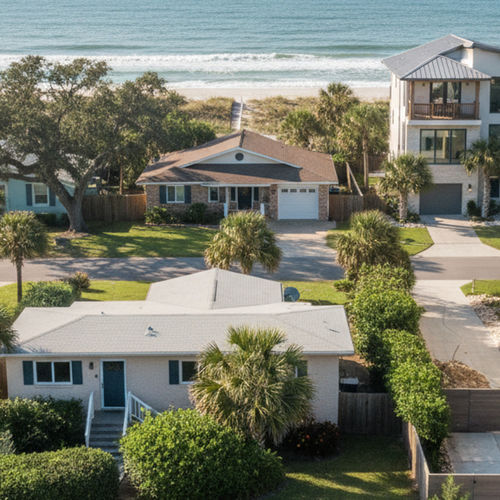
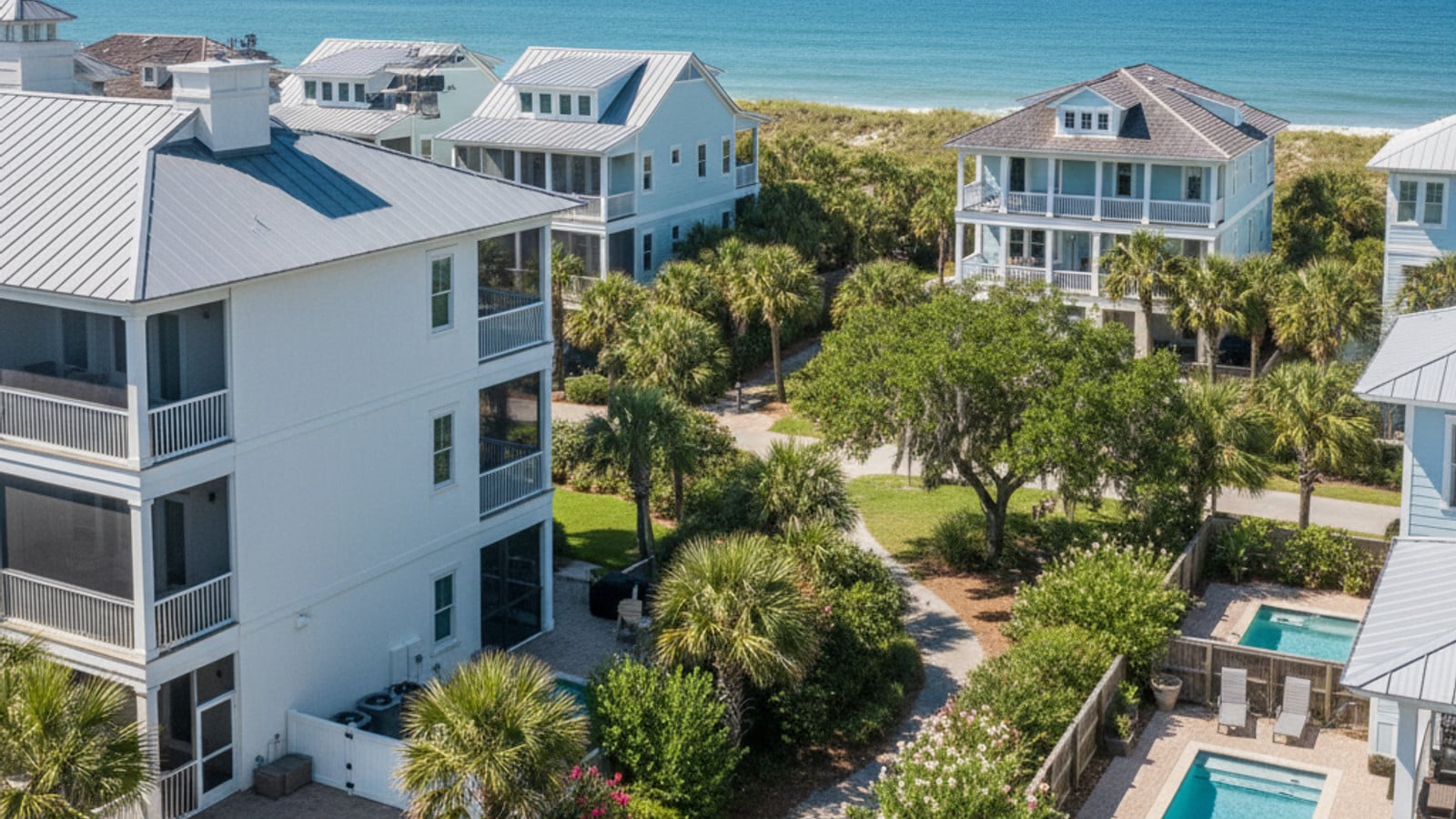
Jacksonville Beach real estate is heavily dominated by coastal condos, multi-story townhomes, and beachside single-family properties on smaller lots. Buyers entering the coastal market must accept that they are trading interior square footage for ocean proximity.
Holding costs are another critical factor for investors and homebuyers to evaluate. Duval County features an effective property tax rate ranging from 0.77% to 1.1%, but Jacksonville Beach residents pay a slightly higher effective rate of approximately 1.25% due to additional municipal millage.
Insurance premiums are also a crucial part of the financial equation when purchasing property in Northeast Florida. Homes situated on San Pablo Island often require specialized flood and windstorm coverage, which adds to the monthly carrying costs compared to further inland properties.
Commuting and Transportation Networks
Navigating between the coast and the urban core is a daily reality for many commuters living in Northeast Florida. The drive from Jacksonville Beach to Downtown Jacksonville covers about 15 to 18 miles of varied terrain.
Commuters should expect a 30 to 40-minute drive during peak morning and evening traffic hours. The transit network relies heavily on two primary east-west corridors - JTB, also known as Butler Blvd, and Beach Blvd.
These main arteries efficiently connect San Pablo Island to major inland employment hubs. The transit infrastructure also provides straightforward access to the Naval Station Mayport to the north.
Medical staff and healthcare workers benefit from the Mayo Clinic being located just off San Pablo Road, right at the western edge of the beach communities. Public transportation options exist, but the region is heavily car-dependent overall.
Parking infrastructure varies drastically depending on your destination. The downtown commercial district relies on structured parking garages, whereas the coastal commercial strips utilize surface lots and street parking.
Commuting from the beach to downtown is highly predictable, but daily drivers must strictly factor in that 40-minute transit time when choosing a home location.
Parks, Amenities, and Water Access
Both municipalities prioritize outdoor recreation, but the natural focal points are completely different. The city of Jacksonville centers its recreational infrastructure around the St. Johns River, offering extensive access for boating, kayaking, and fishing.
Notable inland green spaces include Memorial Park, which provides sweeping river views in the historic Riverside neighborhood. Jacksonville Beach, on the other hand, is defined by its direct Atlantic Ocean frontage and the iconic Jacksonville Beach Pier.
Coastal residents utilize Huguenot Park for community athletics and rely on nearby Hanna Park for its extensive hiking trails, off-road biking, and protected beachfront. For those willing to drive a bit further, the region offers exceptional state facilities.
Fort Clinch State Park to the north provides extensive historical trails and unspoiled beachfront environments. Residents looking for weekend excursions frequently travel south along Florida State Road A1A to reach the historic city of St. Augustine.
Healthcare amenities are robust across the entire region. The proximity of the Mayo Clinic ensures that both inland and coastal residents have immediate access to world-class medical facilities without a prolonged highway commute.
Inland Jacksonville wins for deep-water boating and riverfront recreation, while the beach municipalities dominate for surfing and oceanfront trail access.
Duval County Public Schools Comparison
Educational zoning is a major consideration for buyers moving to the Jacksonville area. Both the inland city and the coastal municipalities are served by the Duval County Public Schools system.
This unified district means that county-wide academic standards and choice programs apply regardless of your specific zip code. Jacksonville Beach features several highly regarded zoned options, including San Pablo Elementary and Seabreeze Elementary.
The coastal area is also home to the Jacksonville Beach Elementary magnet program, which draws students for its specialized curriculum. Older students living at the beach typically attend nearby Fletcher High School, located just north in Neptune Beach.
The broader city limits of Jacksonville contain dozens of zoned options and specialized magnet high schools. Securing a spot in a specialized magnet school often involves navigating a district-wide lottery system.
Transportation logistics play a role in school selection for many households. The district provides busing for zoned schools, but attending a magnet program outside your immediate area often requires coordinating private transportation.
The county-wide magnet system provides excellent academic choices, but beach residents will need to weigh the logistics of commuting inland if they select a specialized program outside their immediate zone.
Frequently Asked Questions
Is Jacksonville Beach the same as Jacksonville?
No, they are separate entities with distinct boundaries. Jacksonville is a massive consolidated city spanning over 800 square miles, while Jacksonville Beach is a smaller, independent municipality located on San Pablo Island. They share Duval County services but maintain different local governments.
How far is Downtown Jacksonville from the beach?
The distance between the downtown urban core and the coastal municipalities is approximately 15 to 18 miles. Drivers typically use JTB or Beach Blvd, resulting in a 30 to 40-minute commute during peak traffic hours.
Are property taxes higher in Jacksonville Beach?
Yes, property owners at the beach pay a slightly higher rate due to local municipal millage. The effective property tax rate in Jacksonville Beach is approximately 1.25%, compared to the 0.77% to 1.1% effective rate found in the broader inland city.
Check out this article next