

What to Expect When Living in Jacksonville, FL in 2026
Jacksonville is the most populous city proper in Florida - 949,611 residents in the 2020 census, and a metro area of over 1.76 million that ranks fourth in the state and 38th in the United States. Those numbers matter when you look at homes for sale in Jacksonville, FL because they shape everything from your morning commute to what you'll pay at closing.
If you're considering a move here, the smart move is to understand the housing costs, daily expenses, and commute realities before you fall in love with a neighborhood that doesn't work for your life.
What to Know About Jacksonville, FL
Jacksonville consolidated with Duval County back in 1968, which created a single municipal government covering an enormous swath of land. That's not just a civics footnote - it means two neighborhoods can share a city name and feel like entirely different worlds, with a 45-minute drive between them.
The local median household income is $69,872. The economy is broad, and the city holds the distinction of being the largest by city-proper limits in the entire Southeast.
Who the City Fits Best
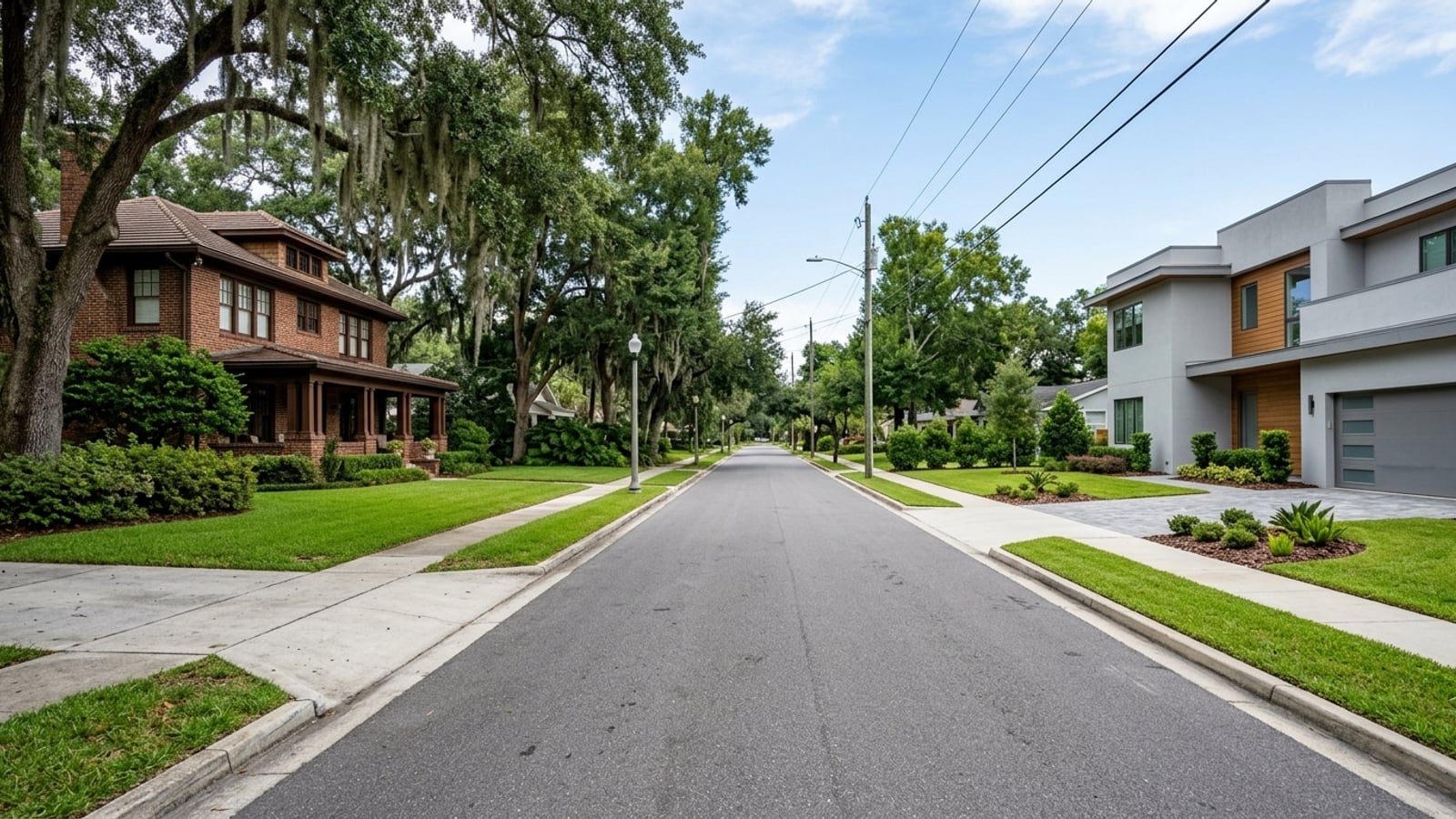
The people I see moving here tend to fall into a few categories: working professionals, retirees chasing Florida's tax advantages, and families who need more space than South Florida can realistically offer at a price they can afford. The housing stock runs the full spectrum - historic districts close to the urban core on one end, brand-new suburban development on the other.
Here's the thing to think hard about before you pick a zip code: this city is vast, and if you land on the wrong side of it from your job, you'll spend a meaningful chunk of your life in the car. Location relative to your workplace isn't just a preference here - it's a financial and quality-of-life decision.
Where Jacksonville Is Located
Jacksonville sits in the northeastern corner of Florida, fully within Duval County, close to the Georgia border and stretching east toward the Atlantic Ocean.
The footprint of this place is genuinely large, and the practical consequence is that you'll be driving. Public transit exists, but the honest answer is that most residents rely on regional highways and interstates for anything beyond their immediate neighborhood.
Commuting to the Beaches and St. Augustine
Downtown to Jacksonville Beach is roughly 25 to 30 minutes - a 20- to 23-mile run that most residents make without much thought on a weekend.
If you're heading further south to St. Augustine, budget about 45 to 46 minutes via I-95. That's a 40- to 41-mile trip connecting you to one of the oldest cities in the country, and it's an easy day trip for dining or historic tourism.
Cost of Living and Housing Prices
Cost of living here lands somewhere near the national average, though the exact number depends on which index you trust. RentCafe and C2ER put Jacksonville about 10% below the national average. AreaVibes comes in at 8% above. Salary.com suggests roughly 1% higher than average, and uscostofliving.com puts it at 2% below.
The range is wide enough that you shouldn't anchor to any single figure. What you spend on groceries, utilities, and transportation will depend on which neighborhood you're in and how you live.
Local Real Estate Trends
The median sale price in Jacksonville sits around $308,890, and homes are spending a median of 57 days on the market - which gives you a real window to look carefully before committing. There are about 4,563 active listings right now, representing a 3.9-month supply of inventory. Sellers are averaging 97.5% of their list price, and about 13.5% of homes sell above asking.
Jacksonville Crime Rates and Safety Data
Crime data for Jacksonville varies depending on the source, and the city's sheer size makes any single statistic hard to apply broadly. According to NeighborhoodScout, a resident's overall chance of becoming a victim of violent or property crime is 1 in 31, and the city carries one of the higher rates of motor vehicle theft in the country.
Other 2026 sources report a total crime rate of 64 per 1,000 residents - broken out into 51.56 property crimes and 12.43 violent crimes per 1,000. AreaVibes, drawing on 2024 FBI data, puts violent crime odds at 1 in 317 and property crime odds at 1 in 60.
Understanding the Statistics
Citywide averages can mislead you in a place this large. The urban core and a quiet suburban development on the periphery may share a city name but very little else in terms of street-level reality.
Before you make an offer, pull local police reports and check law enforcement crime mapping tools for the specific address you're considering. Better yet, visit the neighborhood at different times of day. That's not something any statistic can replace.
Population and Demographics
The 2020 U.S. census put Jacksonville at 949,611 residents - the 10th most populous city in the United States. The broader metro area, at over 1.76 million, ranks 38th in the country. Population density clusters around the downtown business district and fans out through Duval County, all under a single consolidated municipal administration.
Income and Community Size
A population this size supports an unusually wide range of commercial districts, healthcare systems, and educational institutions - along with major concert venues and an extensive public parks network.
If a small-town feel is what you're after, it exists here, but you'll need to seek out specific enclaves deliberately. The default setting of this city is large-scale.
Weather and Year-Round Climate
Jacksonville runs on a humid subtropical climate - long, hot summers, afternoon thunderstorms that arrive on schedule most days, and winters that are short and mild by the standards of just about anywhere north of here. Being in northern Florida means there's more seasonal variation than you'd find in Miami or Tampa, and the Atlantic proximity does bring coastal breezes that take some of the edge off summer heat.
What Winters Are Like
Winter here is genuinely mild. You'll spend time outside year-round, which is a real quality-of-life benefit for people relocating from places that get actual winters. Temperatures do dip lower than South Florida - you'll want a jacket for a stretch of months - but the kind of cold that shuts down roads or cancels plans simply doesn't happen here.
Pros and Cons of Moving to Jacksonville
The clearest argument for Jacksonville is the housing market. A median sale price around $308,890 goes a long way compared to what you'd spend for equivalent space in Miami or Naples. Add direct access to Atlantic beaches, professional sports, a large municipal parks system, and Florida's complete absence of a state income tax, and the case is straightforward for certain buyers.
The Drawbacks
The size of the city cuts both ways. What gives Jacksonville its housing affordability and its range of options also means you can end up with a brutal commute if you choose the wrong location. Public transportation outside the urban core is limited, so a car isn't optional here - it's the only plan.
The climate brings real trade-offs too. Intense summer humidity is part of daily life, and Atlantic hurricane season is an annual reality. Before you finalize your budget, look hard at flood insurance costs and property insurance premiums. They're not an afterthought in this market.
Lifestyle and Things to Do
The recreational options here are broad - hiking, kayaking, and outdoor activity across a significant network of municipal parks, local seafood spots near the coast, a growing dining scene in the urban core, museums, performing arts venues, and entertainment districts across the city.
Neighborhoods to Consider
Riverside is close to downtown with historic homes, tree-lined streets, local arts markets, and independent cafes - older architecture alongside modern infill. San Marco sits just south of downtown across the river, with a distinct commercial district and riverfront parks. If newer construction is more your speed, the Southside area delivers large retail centers, modern apartment complexes, and proximity to major employment hubs.
Senior and Retirement Living
Florida's appeal to retirees is well-established, and Jacksonville fits that pattern. No state income tax, mild winters, and access to major medical infrastructure make it a practical choice for people on fixed incomes who want out of colder climates. The healthcare options here are extensive enough that residents generally don't need to look out of state for specialized care.
Assisted Living Options
The city has a full range of senior living options - active adult communities, independent living facilities, and assisted living centers spanning from high-end continuing care retirement communities to more modest assisted living apartments in the suburbs.
If you're evaluating senior living in Jacksonville, FL, touring facilities in different parts of the city is worth the time. Amenities, healthcare services, and costs vary enough between locations that it's hard to compare on paper alone.
Frequently Asked Questions
What is the cost of living in Jacksonville, FL?
The cost of living in Jacksonville runs close to the national average. Different indices place it anywhere from 10% below the national baseline to 8% above. What you spend will depend on your specific neighborhood and how you live day to day.
What is the crime rate in Jacksonville, FL, and is it safe?
Crime rates shift depending on the neighborhood and the data source. Some figures show a 1 in 31 chance of violent or property crime; others report a total crime rate of 64 per 1,000 residents. Before settling on an area, pull address-specific data from local law enforcement - citywide averages won't tell you much in a city this size.
What are the pros and cons of living in Jacksonville, FL?
On the plus side: a median home price around $308,890, no state income tax, and easy access to Atlantic beaches. On the other side: the layout means long commutes, public transportation is limited, and summer heat and humidity are real factors.
What are winters like in Jacksonville, FL?
Mild. You can be outdoors year-round, and while it does get cooler than South Florida, freezing temperatures that interrupt daily life are rare. You'll need a jacket for a few months, but snow is essentially a non-issue.
Is Jacksonville, FL a good place to live for families or retirees?
It offers real advantages for both. Retirees benefit from the absence of state income tax and access to major medical centers. The city's parks system, museums, and relatively accessible housing market are draws for other residents as well.
What county is Jacksonville, FL in and where is it located?
Jacksonville is in Duval County, in the northeastern corner of Florida. The city and county consolidated in 1968, so municipal boundaries cover nearly the entire county. It sits just inland from the Atlantic Ocean, close to the Georgia border.
How does the city compare to nearby planned communities?
The city limits cover an enormous area with everything from historic districts to brand-new suburban development. Buyers often review a Jacksonville versus Nocatee comparison to decide if they prefer the municipal amenities or a dedicated suburban environment.
What kind of recreational activities are available in the area?
The region provides direct access to Atlantic beaches, professional sports, and an extensive municipal parks system. You can easily fill your weekends with local recreational activities like hiking, kayaking, and visiting museums.
Check out this article next