
When buyers start looking at Duval County real estate, the decision often comes down to Jacksonville vs Neptune Beach. This choice represents a stark contrast between a sprawling, diverse metropolitan hub and a highly concentrated coastal enclave.
Understanding the differences in housing costs, daily commutes, and lifestyle amenities is crucial for making the right investment. Both locations offer distinct advantages, but the geographical realities heavily influence daily routines and property carrying costs.
Whether you want the energy of downtown high-rises or the walkability of a barrier island, narrowing down your priorities will dictate your search. Reviewing the objective data for both areas helps clarify which lifestyle aligns with your real estate goals.
Urban Sprawl vs. Walkable Coastal Living
The most immediate difference between mainland Jacksonville and Neptune Beach is their physical footprint. Jacksonville covers a massive 874 square miles, making it the largest city by area in the contiguous United States.
In sharp contrast, Neptune Beach occupies just 2.5 square miles along the Atlantic Ocean. This dramatic difference in scale dictates how residents navigate their daily lives, run errands, and commute to work.
Buyers looking at homes for sale in Jacksonville must be prepared for a car-dependent lifestyle across dozens of distinct, spread-out neighborhoods. Meanwhile, the coastal municipality offers a condensed footprint where a bicycle is often the preferred mode of transit.
Walkability and the Neighborhood Vibe
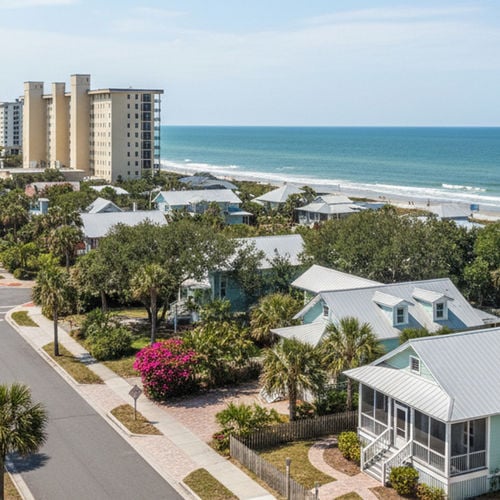
Neptune Beach delivers exceptional walkability, particularly for homes situated near the Beaches Town Center. Residents can easily access local coffee shops, boutique retail, and oceanfront dining without ever starting an engine.
Jacksonville offers a completely different rhythm, with its lifestyle options spread across massive commercial corridors and historic districts. While specific urban neighborhoods feature walkable blocks, the broader city necessitates driving for most daily errands and professional commutes.
Median Home Prices and Property Types
Real estate pricing shifts dramatically the moment you cross the Intracoastal Waterway. The financial commitment required for mainland properties differs vastly from the premium commanded by barrier island zip codes.
The median home price in Jacksonville sits around $300,000, offering a relatively accessible entry point for buyers. Conversely, Neptune Beach median prices range from approximately $780,000 to well over $1.2 million.
This substantial price gap is driven directly by inventory constraints and geographic limits on the coast. With no room for new subdivisions, the limited supply of island housing keeps property values at a premium.
Jacksonville: High-Rises and Suburban Developments
The mainland housing stock provides immense variety, ranging from downtown high-rise condominiums to sprawling single-family homes in master-planned suburbs. Buyers can find expansive lots, new construction, and diverse architectural styles across the city.
Many of these newer suburban developments come with homeowner association structures that manage neighborhood amenities like pools and fitness centers. These HOA fees vary widely across the mainland, adding a variable carrying cost depending on the specific community.
Neptune Beach: Oceanfront Homes and Coastal Restrictions
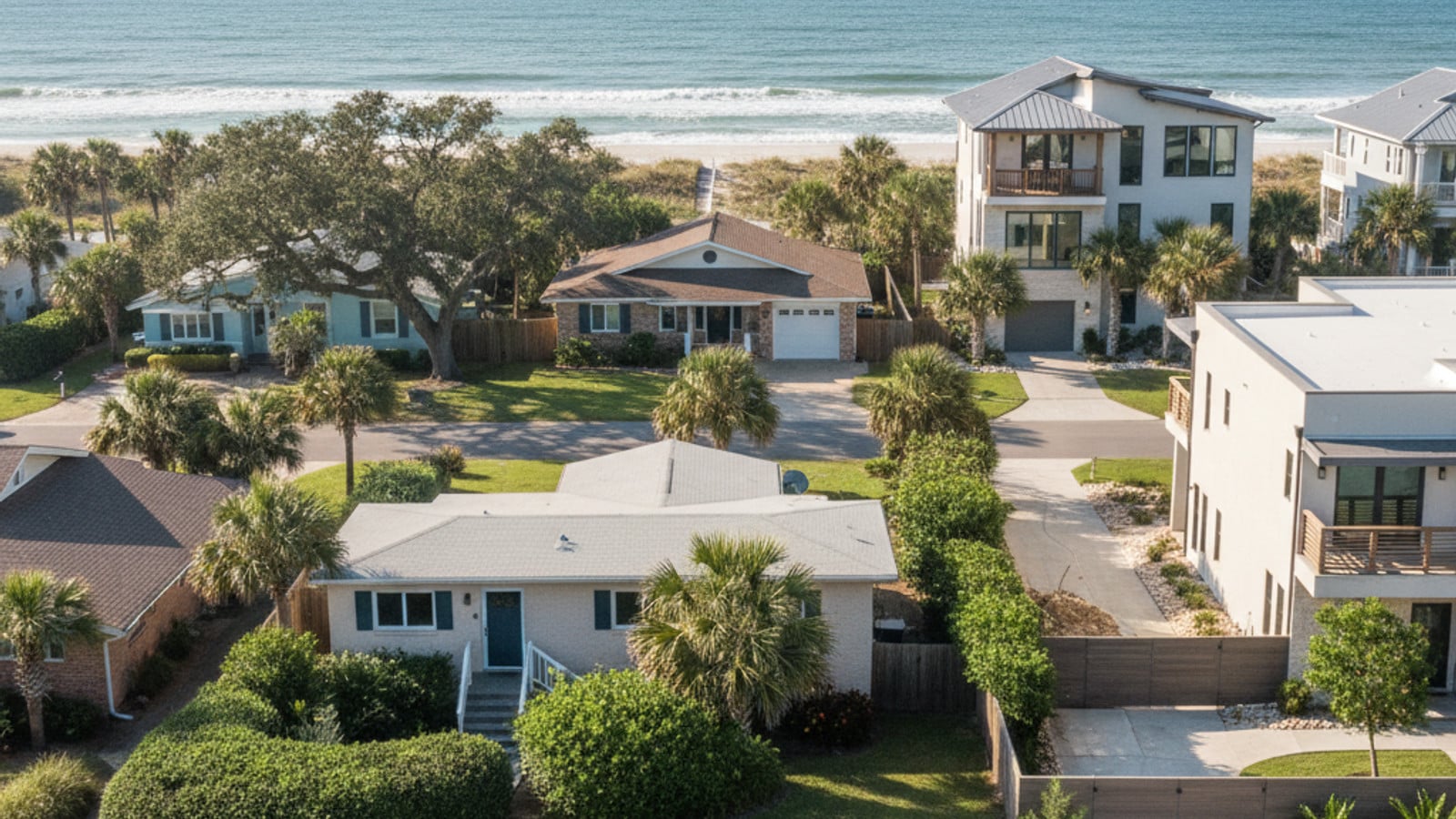
Housing on the barrier island is characterized by older coastal cottages, mid-century ranch homes, and luxury beachfront properties. Strict local zoning laws actively limit high-rise development, preserving the low-density skyline and neighborhood feel.
Purchasing coastal property also requires careful attention to flood zone classifications. Mandatory flood insurance is a reality for many of these parcels, which significantly increases the monthly carrying costs of the home.
Commuting from the Coast to Downtown Jacksonville
Employment hubs are primarily located on the mainland, making the daily commute a major factor for coastal residents. Living by the ocean means factoring in bridge crossings and highway traffic into your daily schedule.
The drive from Neptune Beach to downtown Jacksonville spans approximately 17 miles. Residents typically rely on Atlantic Boulevard or Beach Boulevard to make this east-to-west trek across the city.
Understanding these traffic patterns is essential for anyone balancing a coastal home with a downtown career. The time spent in transit can vary wildly depending on the time of day and bridge conditions.
Peak Drive Times and Regional Hubs
During non-peak hours, the drive to the downtown core takes a manageable 27 to 30 minutes. However, rush hour traffic easily pushes this commute to 45 minutes or more.
For medical professionals, proximity to the Mayo Clinic is a major draw, requiring only a 10 to 15-minute drive from the coast. Traveling to other major employers like Naval Air Station Jacksonville requires navigating a longer, highway-heavy route.
Public Transit and Alternative Transportation
The Jacksonville Transportation Authority provides bus routes connecting the beach municipalities to the mainland. While public transit is available, it is rarely the most efficient option for daily professional commuting.
Taking the JTA Line 10 bus from the coast to downtown requires approximately 55 to 60 minutes in transit time. Because of these extended travel durations, personal car ownership remains highly recommended for residents navigating Duval County.
Public Parks, Recreation, and Amenities
The recreational landscape in this region is defined entirely by water, but the type of water dictates the activities. The mainland offers a river-based lifestyle, while the barrier island revolves entirely around the ocean.
This geographic divide creates two distinct amenity sets for residents to enjoy. Buyers must decide whether they prefer launching a boat into calm inland waters or walking out their front door to catch morning waves.
Both municipalities invest heavily in public spaces, but the focus of those spaces reflects their natural surroundings. Reviewing the objective recreational features helps buyers align their hobbies with their home location.
St. Johns River and Urban Amenities
The mainland boasts an expansive urban park system heavily focused on the St. Johns River. These spaces offer extensive hiking trails, nature preserves, and excellent infrastructure for inland boating.
Mainland residents benefit from excellent infrastructure tailored to this environment. The area features several distinct advantages:
Public boat ramps providing direct access to the St. Johns River and its tributaries.
Massive nature preserves featuring miles of shaded hiking and biking trails.
A widespread variety of restaurant options scattered across major commercial corridors.
Direct Ocean Access and Jarboe Park
Neptune Beach focuses its recreational energy entirely on the Atlantic coastline. The municipality is designed to maximize access to the water, making it a premier destination for coastal activities.
The coastal lifestyle revolves around immediate proximity to the sand and surf. Residents enjoy several key local features:
Direct access to the Atlantic Ocean with notable surfing locations along the beach breaks.
Jarboe Park serving as a central municipal hub with walking paths and community spaces.
Densely concentrated seafood restaurants and nightlife venues situated along highway A1A.
Local Infrastructure, Schools, and Property Taxes
Navigating the governmental structure of Duval County requires understanding how the different municipalities interact. While Jacksonville operates under a consolidated city-county government, Neptune Beach maintains its own distinct municipal authority.
This dual-layered system directly impacts local infrastructure, zoning regulations, and the bottom line for property owners. Buyers must pay close attention to jurisdictional lines, as they dictate the long-term carrying costs of the property.
From annual tax bills to public services, the address on the deed determines the financial obligations of the homeowner. Comparing these structural differences is just as important as comparing the homes themselves.
Duval County Public Schools Zoning
Despite the municipal differences, both geographic areas are served by the Duval County Public Schools district. The county-wide system manages educational facilities across the mainland and the barrier islands.
Specific residential zoning dictates exact school assignments for any given property. Buyers should always verify individual addresses on the district portal to confirm attendance boundaries before making an offer.
Property Tax Rate Variations in Beach Municipalities
The consolidated government structure of Jacksonville establishes a base property tax rate of approximately 1.2 percent. This rate applies to the vast majority of mainland properties, keeping annual tax burdens relatively predictable.
Neptune Beach residents pay this base county tax plus an additional municipal millage rate to fund their local government. This combined structure pushes the effective tax rate to roughly 1.7 to 1.8 percent, significantly increasing total carrying costs for coastal buyers.
Frequently Asked Questions
How close is Neptune Beach to Jacksonville Beach?
Neptune Beach and Jacksonville Beach are immediately adjacent, separated only by a local street boundary. Residents frequently walk or bike between the two municipalities along the coastline or 1st Street. This seamless connection allows locals to easily enjoy the amenities of both towns.
Are housing costs cheaper in Neptune Beach or Jacksonville Beach?
Jacksonville Beach generally offers more accessible pricing due to a higher volume of condominium inventory. Neptune Beach carries a higher median price point, often exceeding $780,000, driven by lower inventory and strict zoning. Buyers looking for lower entry price points directly on the coast typically find more options in Jacksonville Beach.
Check out this article next