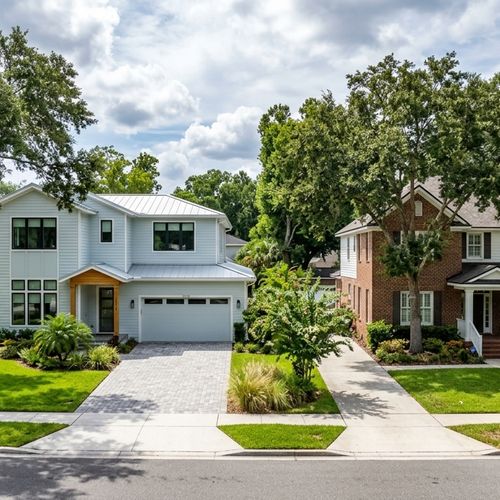

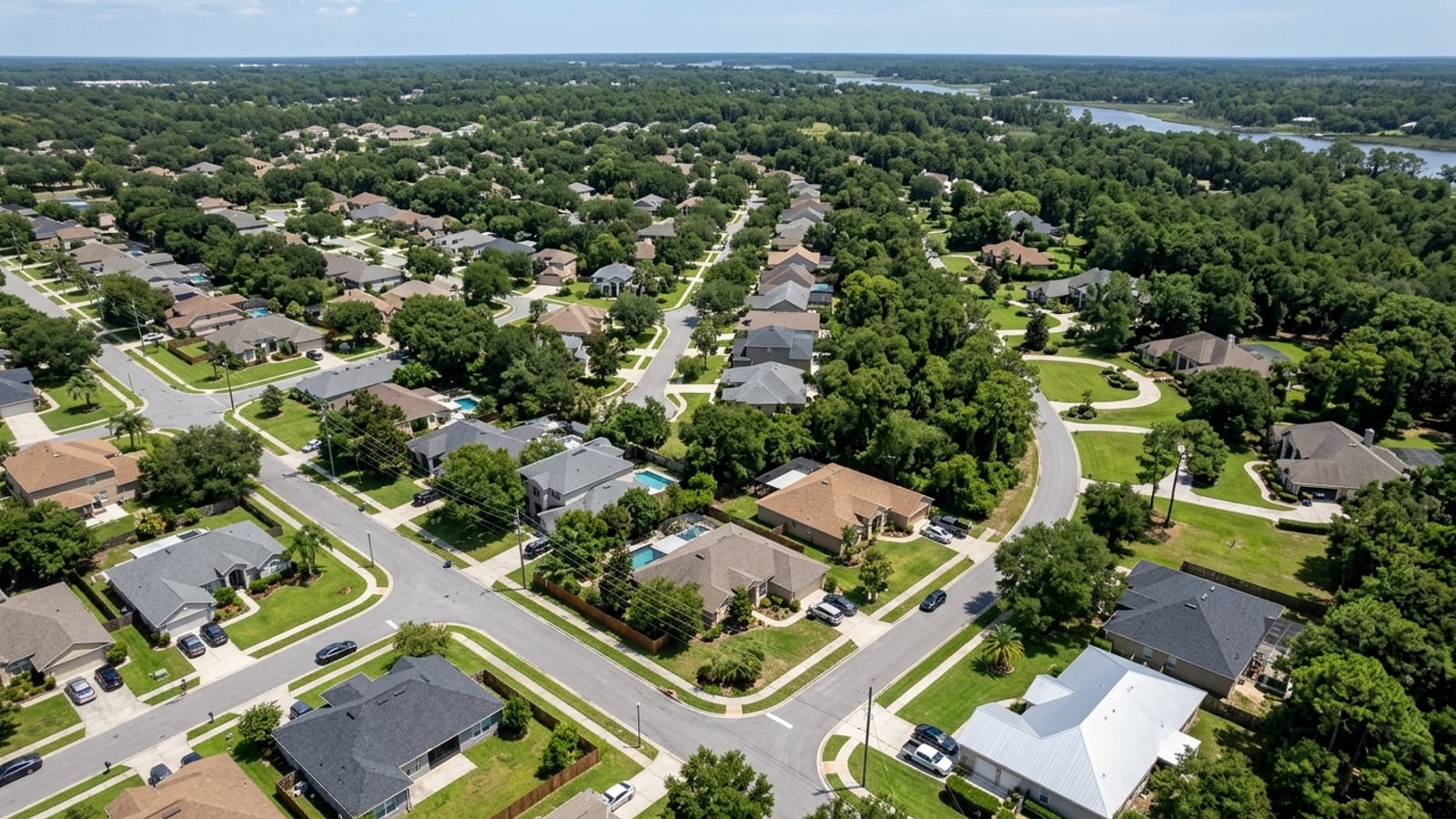
Most buyers touring Jacksonville homes are thinking about square footage, school districts, and commute times. Fair enough. But if you are planning on living in Jacksonville, the infrastructure running underneath a house - specifically how it gets water and where that water comes from - will affect your monthly budget and your maintenance to-do list for as long as you own the place. The median sale price in the area sits around $317,000, and homes spend roughly 59 days on the market before selling. That's enough time to do your homework.
As you tour available homes, you'll run into properties connected to the municipal water grid and others drawing from private wells. The two systems are genuinely different in what they cost, what they require from you, and what can go wrong. Here's what you should know before you're sitting at the closing table.
City Water Versus Well Water in Duval County
Most residents get their tap water through JEA, the publicly-owned utility serving over a million people in Northeast Florida. JEA manages electric, water, sewer, and reclaimed water services across a vast network. When a property connects to that grid, JEA handles sourcing, treatment, and delivery - you just pay the bill.
Private wells operate entirely outside that system. Homeowners with wells draw groundwater directly from their own property. According to historical USGS water-use data for Duval County, about 74% of total water used comes from public city supplies, while around 9% comes from domestic private wells. Both options are common enough here that you'll genuinely encounter either one during a typical home search.
Defining Municipal and Private Systems
A municipal water well is a large-scale extraction point managed by JEA to feed the public grid. The utility treats that water at centralized plants before piping it out to individual neighborhoods. You pay for this convenience through monthly metered billing.
Private wells are drilled, driven, bored, or dug directly on a residential lot to serve just that house. The homeowner owns the equipment and is, in effect, their own water utility. No monthly water bill - but full responsibility for pump repairs, filtration, and system maintenance falls on you.
How to Tell Which System a Home Uses
A visual inspection of the yard is your first move. Properties with a private well usually have a visible wellhead - a capped pipe sticking out of the ground - or a small pump house somewhere on the lot. A pressure tank inside the garage or utility closet is another tell.
City water connections look different. Look for a municipal water meter box near the street or sidewalk. You can also call JEA directly and ask whether a specific address has an active water service account. That takes about two minutes and removes all doubt.
What Water Costs in Jacksonville
If you're on the public grid, you'll receive a monthly bill based on exactly what you use. JEA bills residential water consumption on a tiered structure designed to encourage conservation.
For a standard 3/4-inch meter, JEA charges a basic monthly fee of $18.90. The first 6,000 gallons cost $0.93 per 1,000 gallons. Usage from there up to 20,000 gallons runs $2.60 per 1,000 gallons, and anything above 20,000 gallons jumps to $5.60 per 1,000 gallons. Staying in that lowest tier matters more than most buyers realize.
Typical Monthly Utility Bills
An average residential water-only bill in Jacksonville runs about $25.25 per month for a household using 5,000 gallons. Combined electric, water, sewer, and trash services average around $205 to $219 per month across the area.
The things that push bills up are predictable: heavy lawn irrigation, filling a pool, or a slow leak somewhere in the plumbing. None of those are exotic problems, but they're worth keeping in mind when you're evaluating a property with a large yard or an aging irrigation system.
Well Ownership and Septic Costs
Well owners don't pay a monthly water bill. They do pay for the electricity to run the pump, plus periodic costs for filter replacements, pump servicing, and water treatment. It's not nothing, but it's a different kind of expense - more irregular than monthly.
Homes with private wells typically use private septic systems for wastewater rather than connecting to a municipal sewer line. No monthly sewer fee to JEA, but you'll pay out of pocket to have the septic tank pumped and inspected every few years. Budget for that before you buy.
Water Quality and Health Standards
JEA treats public water to meet federal and state drinking water standards before it reaches your tap, with ongoing monitoring and treatment adjustments to stay compliant. That side of things is handled for you.
Private well owners handle their own water quality. The Florida Department of Health in Duval County (DOH-Duval) oversees well permitting, but routine testing is entirely the homeowner's responsibility. Nobody is coming to check for you.
Testing and Treating Private Well Water
DOH-Duval identifies bacteria and nitrate as the most common threats to private well water in this area. Local groundwater also frequently contains naturally occurring iron and manganese, along with copper from acidic water corroding pipes. Calcium and magnesium are common too - that's your hard water problem.
DOH-Duval offers required water sample testing services starting at around $100. Annual testing is the standard recommendation. Depending on what your results show, you may need a water softener, a reverse osmosis unit, or some combination of filtration systems. The right setup depends on your specific water, which is why you test first.
Connecting to City Water in Jacksonville
If a home has a failing well and JEA lines run near the property, connecting to the municipal system is an option - though not a cheap or simple one. It means paying connection fees and hiring a plumber to run lines from the street to the house.
JEA charges a one-time Growth Capacity Charge before the initial connection. This isn't a flat fee. The amount depends on projected daily flow estimated by an engineer or determined by the Florida Administrative Code, and JEA requires these fees to be paid prior to connecting to the water system. Get that number in writing early if you're considering this route.
Buying a Home With a Private Well
Request a thorough water test during the inspection period. You want to verify the pump's condition, the well's flow rate, and the water's safety profile before you finalize anything. These aren't optional boxes - they're how you avoid buying someone else's problem.
Check the permit history with DOH-Duval to confirm the well was installed legally. State law allows homeowners to construct a well two inches or less in diameter for personal use without a licensed contractor, but a permit and well completion report may still be required. If those records don't exist, that's a conversation you need to have before closing.
If you're thinking about switching to city water after you move in, price it out now. Low-to-moderate income residents may qualify for deferred-payment loans through the city's Utility Tap-In Program (UTIP) to help cover water line connection fees and plumbing costs. Worth knowing about before you assume it's out of reach.
Frequently Asked Questions
Does JEA cover all electricity and water services across Jacksonville, or will I need multiple providers?
JEA provides electric, water, sewer, and reclaimed water services to over a million Northeast Florida residents. Most homes on the municipal grid receive all of those services through a single JEA account. Properties with private wells or septic systems will only use JEA for electricity.
How much is the typical JEA utility deposit for a new homebuyer in Jacksonville, and can it be waived?
JEA handles utility accounts for most Jacksonville residents. Contact JEA directly to open an account and confirm any deposit requirements based on your specific property - they're the right source for that answer.
How far in advance of my closing date should I schedule utility transfers in Jacksonville?
Contact JEA well before closing to make sure electric and water services stay active on moving day. Setting up the transfer early is how you avoid an interruption right when you don't want one.
Are trash and recycling services in Jacksonville billed through JEA or handled separately by the city?
Trash service costs are typically calculated alongside other standard household utilities. Combined utility bills in Jacksonville - electric, water, sewer, and trash - average around $205 to $219 per month.
What is the average monthly cost for electricity and water in a Jacksonville single-family home during the summer?
The average combined utility bill for electric, water, sewer, and trash in Jacksonville is roughly $205 to $219 per month. A water-only bill averages about $25.25 for 5,000 gallons of usage, though seasonal irrigation can change that number meaningfully.
How do I find out if a Jacksonville property relies on city water and sewer versus a private well and septic system?
Look for a JEA water meter near the street, or a visible wellhead and pump house in the yard. Calling JEA directly to check the property's service address will confirm whether it connects to the municipal water grid - and that call takes about five minutes.
Check out this article next