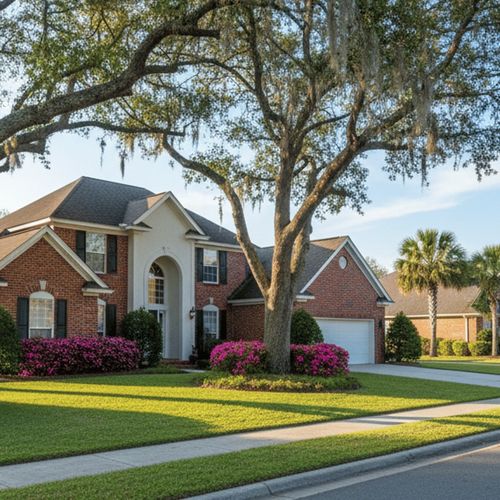

There is something special about the idea of designing your own space in Northeast Florida. Whether it’s a riverfront retreat or a modern farmhouse tucked away on the Westside, building a home from scratch gives you control that buying resale simply can’t match. With inventory for existing homes still tight in early 2026, more buyers are realizing that if they can’t find the perfect house, they might as well build it.
However, jumping into a construction project isn’t quite the same as signing a contract for a move-in ready home. The market has shifted a bit this year, with interest rates stabilizing and demand for modern, storm-resilient features steadily rising. If you are thinking about living in Jacksonville FL and want to construct your own place, you need a solid game plan.
This guide will walk you through what it actually takes to get dirt moving in Duval County right now. We’ll look at everything from land acquisition and budgeting to navigating the permitting office downtown.
Step 1: Budgeting & Financing Your Build
Before we even start looking at lots, we need to have a serious talk about the money side of things. Financing a new build is different from a traditional mortgage, and the way you structure your budget can make or break the project.
Most people use a construction-to-permanent loan. Unlike a standard 30-year fixed mortgage where you get all the money at closing, this loan pays out in "draws" to your builder as they complete stages of the work. During the build phase, you typically pay interest only on the amount that has been paid out. Just keep in mind that rates for these loans in 2026 are often slightly higher than standard mortgage rates until the home is finished and the loan converts to a permanent status.
You will also need a healthy down payment, often 20% to 30% if you are buying raw land. Beyond that, you need to understand the difference between "hard costs" and "soft costs." Hard costs are the things you can touch—lumber, concrete, and labor. Soft costs are the invisible expenses that sneak up on you, like architectural fees, soil testing, and impact fees.
It is smart to keep a contingency fund of about 10% to 15% of your total budget. Even with material prices leveling out compared to a few years ago, surprises happen. Maybe the soil needs more fill dirt than expected, or you decide you really need those upgraded countertops. Having that buffer keeps you from stalling out halfway through.
How Much Does It Cost to Build a House in Jacksonville? (2026 Estimates)
One of the first questions everyone asks is, "What is the price per square foot?". The honest answer is that it depends heavily on who is swinging the hammer.
If you are working with a production or semi-custom builder—someone who has a library of floor plans you can tweak—you are likely looking at a range of $140 to $200 per square foot. These builders have buying power and streamlined processes that keep costs down. If you want a true custom home where you hire an architect and design every inch from scratch, that price usually jumps to $250 to $350 or more per square foot.
Then there is the land prep. Florida is flat, but it is also wet. You will almost certainly need to pay for clearing and fill dirt to build up the pad, which can get expensive if the water table is high.
A specific expense that often shocks people new to buying land in Florida is the utility connection fee. In Jacksonville, JEA charges capacity fees to connect a new build to their water and sewer systems. Based on the rates we are seeing in 2026, you should budget anywhere from $7,000 to $10,000+ just for these tap-in fees. That is before you even pay for the pipes to run from the street to your house.
Step 2: Finding and Evaluating Land in Duval County
Picking the right spot is about more than just the view. In Duval County, the difference between building in a master-planned community and a standalone rural lot changes your entire budget structure.
If you build in a developed neighborhood, you might have CDD (Community Development District) fees, but the infrastructure is already there. If you look for land in more rural areas like the Northside or Baldwin, you avoid CDD fees but will likely need to budget for a well and septic system if city water isn’t available.
Always check the zoning before you fall in love with a property. You want to look at the City of Jacksonville’s zoning atlas to ensure the lot is zoned "Residential Low Density" (RLD) or similar. You also need to check the FEMA flood maps. Building in a flood zone doesn’t just increase your insurance; it might require you to build the home on stilts or a significantly raised stem wall, which drives up construction costs.
One last tip for scouting the best neighborhoods in Jacksonville FL for buildable lots: watch out for trees. We love our Southern Live Oaks here, but they are protected. If a massive oak is in the middle of your building footprint, you may have to pay significant mitigation fees to remove it, or redesign your house around it.
Step 3: Navigating Permits and Regulations
Once you have your land and your drawings, it is time to deal with the City of Jacksonville (COJ) Building Inspection Division. This is where patience is a virtue.
The city requires a comprehensive review process. You generally need to submit a "10-set" of plans—detailed architectural drawings that cover everything from electrical layouts to energy calculations. A major part of this is the wind load calculation. Because we are in a hurricane-prone area, the Florida Building Code is strict. Your home needs to be engineered to withstand winds of 130+ mph, which dictates what kind of windows, roof tie-downs, and framing you must use.
In 2026, the timeline for plan review is running about 4 to 8 weeks, depending on the backlog. It can go faster if your plans are perfect, but one small error can send you to the back of the line.
You might also hear about "Concurrency Management System" (CMS) fees. This is a check the city does to ensure the local roads and infrastructure can handle the "impact" of a new home. It’s another paperwork hurdle that your builder usually handles, but it’s good to know it exists so the fee doesn’t surprise you.
Step 4: The Construction Timeline
Once the permit is in hand, the fun part begins. The actual construction process in Jacksonville usually follows four main phases.
Phase 1: Site Work & Foundation. This is where they clear the lot, bring in fill dirt, and pour the slab. In Florida, we mostly use monolithic slabs (concrete poured all at once), though some areas require a stem wall foundation if the lot is low.
Phase 2: Framing & Dry-in. This is the race against the weather. The goal is to get the frame up and the roof on as fast as possible. Our afternoon thunderstorms can be relentless, especially in the summer, so builders work hard to get the structure "dried in" so rain doesn't soak the interior wood.
Phase 3: Rough-ins. With the roof on, the trades come in to run plumbing pipes, electrical wiring, and HVAC ducts through the open walls. This is your chance to double-check where your outlets and light switches are going.
Phase 4: Finishes. Insulation, drywall, flooring, and cabinets go in. This is the longest phase because it requires coordinating many different subcontractors. Finally, you’ll get your Certificate of Occupancy (CO) from the city, which means you can officially move in.
For a production home, this whole cycle takes about 7 to 9 months. If you are doing a complex custom build, expect it to take 12 to 18 months.
Building New vs. Buying Existing: A 2026 Comparison
If you are still on the fence, let’s look at why you might choose to build despite the effort. The biggest factor right now is the cost of living in Jacksonville FL regarding insurance and energy.
New homes built to the 2026 Florida Building Code are significantly cheaper to insure than older homes. Insurance companies offer big credits for new roofs and wind-mitigation features. An older home with a 15-year-old roof might struggle to get affordable coverage, whereas a new build is a preferred risk.
Then there is energy efficiency. A home built today with modern insulation and a high-SEER HVAC system will have much lower JEA bills than a stucco home from the 1980s.
Ultimately, building creates your own inventory. You aren't fighting other buyers in a bidding war for a house that needs a new kitchen anyway. You get exactly what you want, where you want it.
FAQs About Building a Home in Jacksonville
How much does it cost to build a 2,000 sq ft house in Jacksonville, FL?
For a standard semi-custom home, you are likely looking at a construction cost between $280,000 and $400,000 (roughly $140–$200 per sq. ft.). However, this does not include the price of the land or the $7,000+ in utility connection fees, so your total project budget should be higher.
Can I build my own house in Duval County without a contractor?
Yes, Florida allows an "Owner-Builder" exemption, but you must legally act as your own contractor, meaning you are liable for all workers' comp, taxes, and code compliance. It is a significant risk; if you sell the home within a year, you may still be legally responsible for construction defects.
How long does it take to get a building permit in Jacksonville in 2026?
Right now, the administrative plan review process typically takes 4 to 8 weeks. This timeline can stretch longer if the city requests revisions to your architectural plans or if there are zoning hurdles to clear.
What are the impact fees for a new home in Jacksonville?
The biggest "soft cost" is usually the JEA water and sewer capacity fee, which often runs between $7,000 and $10,000 depending on your meter size. You may also encounter school concurrency fees or traffic impact fees depending on exactly where in Duval County you are building.
Check out this article next