
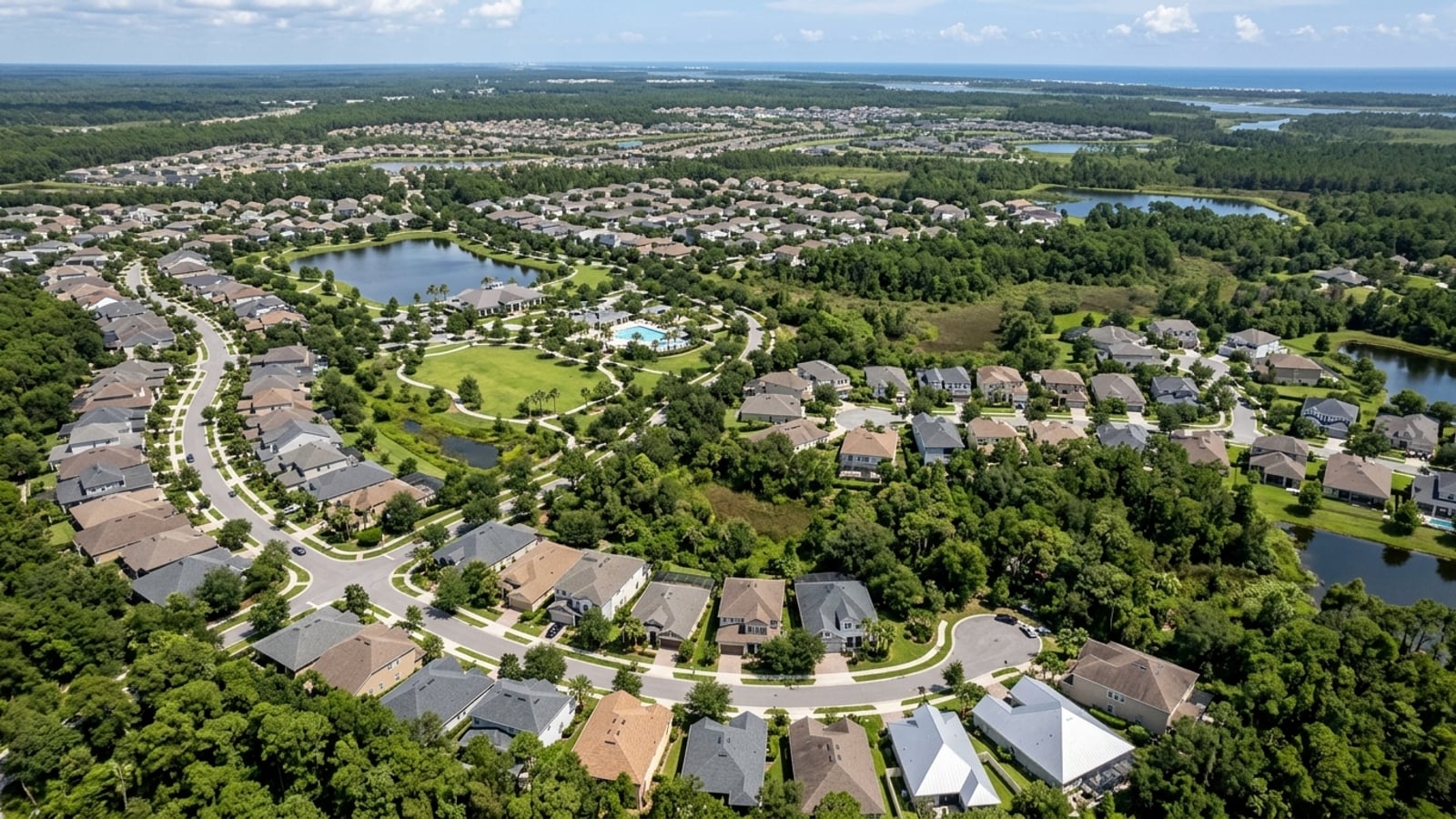
Jacksonville is the largest city in Florida - a consolidated government with Duval County that covers an enormous footprint, with a population hovering around 1,009,831. The geography alone can throw buyers off when searching for homes for sale in Jacksonville, FL: you've got inland forests on one end and the Atlantic coast on the other, all under the same city limits.
The median home price here runs roughly $308,890. What you get for that number depends entirely on where in this city you're looking - a downtown condo and a master-planned community home on the southern edge are two completely different purchases, even if the price tags rhyme.
Overview of Jacksonville Neighborhoods
Jacksonville stretches across the First Coast region, split by the St. Johns River and cut through by I-95 and I-295. It's a big place, and buyers who don't understand its basic layout end up frustrated.
The city breaks down into several primary regions: the Urban Core, Southside, Northside, Westside, Arlington, and the Beaches. Knowing which of those matches your commute and your budget is the first real decision you'll make.
The Main Regions of the City
The Urban Core covers Downtown and its adjacent historic districts. Head east toward the Atlantic and you're moving through the Southside, Arlington, and eventually the Beaches.
The Northside and Westside are a different animal - large tracts of land with a mix of established subdivisions and newer developments. Inventory there often looks quite different from what you'll find on the coastal side.
Understanding the First Coast Area
Jacksonville anchors the broader First Coast region economically, but the market doesn't stop at the city line. St. Johns, Clay, and Nassau counties all feed into this metro, and a lot of buyers commute across those lines every day.
I-95 is the spine. Where your home sits relative to that interstate has a direct, daily effect on your drive time to major employment centers.
Mapping Out the Neighborhoods
Start with the St. Johns River. It divides the east and west sides of the city, and most buyers instinctively pick a side before they do anything else.
I-95 runs north-south straight through the center of the city. I-295 forms a beltway around the perimeter, linking the outer suburbs back to the core. Then there's J. Turner Butler Boulevard - locals call it JTB - which runs east-west and connects the Southside directly to the coastal communities. Learn those three roads and the city starts to make sense.
Downtown and the Urban Core
The Urban Core sits right on the St. Johns River, with high-rise condominiums and commercial districts clustered near the main highway interchanges.
The Southside and Beaches
The eastern half of the city takes in the Southside, Intracoastal West, and the Jacksonville Beaches. You'll find a mix of late 20th-century subdivisions and modern luxury properties depending on how close to the water you get.
The Westside and Northside
The western and northern corridors carry established single-family homes alongside large tracts of undeveloped land. Both regions connect directly to the I-295 beltway, and the Northside puts you close to Jacksonville International Airport.
Housing Types and Prices Across the City
The market is sitting at a median sale price of roughly $308,890, with about 4,563 available homes on hand - that works out to 3.9 months of supply. It's a reasonably balanced market by most measures.
Property type moves the number considerably. Condominiums average around $176,330. Single-family detached homes sit closer to $335,000. Downtown Jacksonville condos and homes recently averaged around $300,000, and prices shift noticeably as you move from the urban center into the surrounding subdivisions.
Detached Single-Family Homes
Single-family homes are the bulk of local inventory, running the range from mid-century builds on the Westside to newer properties near the coast. Older neighborhoods on the Westside sometimes see median prices hovering around $205,000 - a meaningful entry point for buyers who want an established location without a coastal price tag.
Condos and Attached Housing
Attached housing concentrates in the Urban Core, the Southside, and near the beaches. In most cases, these properties carry lower entry prices than detached homes in the same zip codes.
Historic Districts
Riverside, Avondale, and Springfield draw buyers who want older architecture and walkable neighborhoods. All three sit close to the Urban Core and are built on early 20th-century home designs. Zoning in these districts is strict - that's intentional, and it's what keeps the character intact. Inventory runs mostly to preserved single-family homes and smaller attached properties.
Master-Planned Communities
The outer edges of the city have seen significant master-planned development. Nocatee is the most prominent example, combining neighborhoods with schools, parks, offices, and retail under one development umbrella. Wildlight is up in Yulee; eTown sits in the center of Jacksonville; and EverRange is a 1,000-acre site positioned between Nocatee and eTown.
If you're looking south toward St. Augustine, TrailMark and Beacon Lake are worth knowing about - Beacon Lake homes generally start in the mid-$400,000s. Tamaya sits along the city's eastern jurisdiction near Jacksonville Beach, with new construction typically starting in the low $400,000s.
Neighborhood Profiles
Where a property sits relative to the St. Johns River and the Intracoastal Waterway shapes everything - age of housing stock, lot sizes, price points, all of it. Newer developments dominate the southern and eastern edges. Established homes cluster closer to the core and along the western corridors.
Mandarin, Intracoastal West, and Nocatee continue to draw strong buyer demand. If you're shopping at the luxury end, Ponte Vedra Beach is where the inventory tends to be.
Riverside and Avondale
Riverside and Avondale sit just southwest of Downtown, right along the western bank of the St. Johns River. The housing stock here is early 1900s - bungalows, Mediterranean Revival homes - and the access to I-95 is immediate for commuters.
Mandarin and San Marco
San Marco is just across the river from Downtown, offering a mix of historic estates and newer condos. Mandarin is further south along the eastern bank of the St. Johns River - larger lots, mature oak trees, and predominantly mid-to-late 20th-century single-family homes. Both neighborhoods connect to the Urban Core via I-95 or San Jose Boulevard.
Northside and Westside
First-time buyers who are watching their budget often end up here, or in nearby Clay County. Median prices are lower than on the coastal side. The Westside has established subdivisions with quick I-295 access; the Northside mixes older homes with expanding new-construction tracts near the airport.
Cost of Living and the Local Housing Market
Jacksonville's cost of living index sits right at 100 - essentially matching the national average. Living costs run about 1% above the U.S. average but come in noticeably below Florida's state average. Housing specifically tracks about 8% lower than the national average, which matters when you're running monthly budget numbers. The median household income in the city is roughly $72,389.
Homes here spend about 57 days on the market before selling. Sellers are averaging roughly 97.5% of their list price - not a seller's market by any dramatic measure, but not one where buyers are picking up steep discounts either.
Current Home Prices and Inventory
That $308,890 median reflects a steady market with consistent demand. Nearly 13.5% of properties are currently selling above list price, so don't assume every offer has room to negotiate down.
General Living Expenses
Housing costs running slightly below the national average gives buyers here more purchasing power than they'd have in South Florida. Florida's lack of a state income tax adds to that advantage at the household budget level.
Researching Local Crime Data
Don't rely on neighborhood reputation - look up the actual numbers. The Jacksonville Sheriff's Office (JSO) provides a public crime map and data portal online. The FBI Uniform Crime Reporting (UCR) program publishes factual statistics by area as well. Both tools let you pull verified figures for a specific address or street before you make an offer.
Understanding Local School Districts
Duval County Public Schools serves properties within Jacksonville city limits. If you're looking at surrounding areas, you may fall under St. Johns, Clay, or Nassau county districts instead. School assignment is determined by your specific address - always verify the boundary lines using the official attendance-zone maps from the district before you make any assumptions.
Finding Your Next Home
With roughly 3,551 homes sold recently in the area and 3.9 months of supply on hand, buyers have enough inventory to be selective without losing months to an empty market. That said, high-demand areas like Intracoastal West move faster - get your financing sorted before you start touring.
A local agent who knows the difference between attached housing downtown and a detached home in a Southside subdivision will save you time. These aren't interchangeable options, and the transaction process can differ in ways that matter.
Browsing Homes by Area
Searching by region is the fastest way to cut out properties that don't fit your commute. Buyers working downtown typically focus on the Urban Core, San Marco, or Riverside. If new construction is the priority, searches tend to shift toward Yulee, eTown, or St. Johns County. An agent can set up targeted MLS alerts for specific master-planned communities so you're not manually checking listings every day.
Renting vs. Buying
How long you plan to stay here is the central question. Purchasing at the $308,890 median price requires a down payment and closing costs - that's real money upfront. Renting gives you time to learn the city's layout before committing to a specific area. Buying locks in your housing costs in a market that has shown steady historical demand. Neither answer fits every situation, so be honest with yourself about your timeline.
Frequently Asked Questions
What do homes cost across Jacksonville's neighborhoods?
The median sale price is currently about $308,890. Condominiums average around $176,330, while single-family detached homes sit closer to $335,000. Older Westside neighborhoods sometimes hover around $205,000, so where you look makes a real difference.
What types of homes are available in Jacksonville?
You'll find historic homes, downtown condos, mid-century single-family properties, attached townhomes, and luxury estates near the coast. The outer edges of the city feature large master-planned communities with new construction.
How can I research crime data for a specific Jacksonville neighborhood?
Use the Jacksonville Sheriff's Office (JSO) crime map and data portal. The FBI Uniform Crime Reporting (UCR) program also publishes factual statistics. Both resources let you pull verified figures by address - skip the anecdotal stuff.
What school districts serve Jacksonville's neighborhoods?
Duval County Public Schools covers properties within Jacksonville. The surrounding areas fall under St. Johns, Clay, or Nassau county districts. Your specific address determines your school assignment, so verify the boundaries on the district's official zoning maps before assuming anything.
How do I find homes for sale in a specific Jacksonville neighborhood?
Search active MLS listings online or work with a local agent who can set up targeted alerts for specific regions like the Southside, Westside, or the Beaches. That way you're seeing new inventory as soon as it lists - not hours later.
Which Jacksonville neighborhoods are best for first-time homebuyers?
It depends on your budget. The Northside, Westside, and nearby Clay County typically offer more value, with older Westside neighborhoods sometimes posting median prices around $205,000. You get established housing stock at lower entry prices than the coastal communities - a reasonable trade-off if proximity to the beach isn't your top priority.
What type of housing is available in Avondale?
This historic district sits just southwest of Downtown along the western bank of the St. Johns River. Buyers researching the Avondale Jacksonville, FL area will find early 1900s architecture, including bungalows and Mediterranean Revival homes. Strict zoning keeps the neighborhood's character intact, with inventory mostly limited to preserved single-family properties.
Where are the most expensive neighborhoods in Jacksonville?
Luxury inventory and higher price points generally concentrate near the coast and in newer master-planned developments on the southern and eastern edges of the city. If you are searching for the most expensive areas in Jacksonville, FL, Ponte Vedra Beach is where much of the high-end inventory tends to be. Modern luxury properties are also common along the Intracoastal Waterway and the Jacksonville Beaches.
Check out this article next