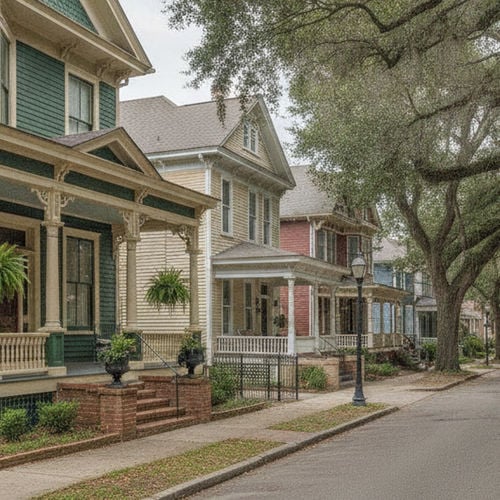

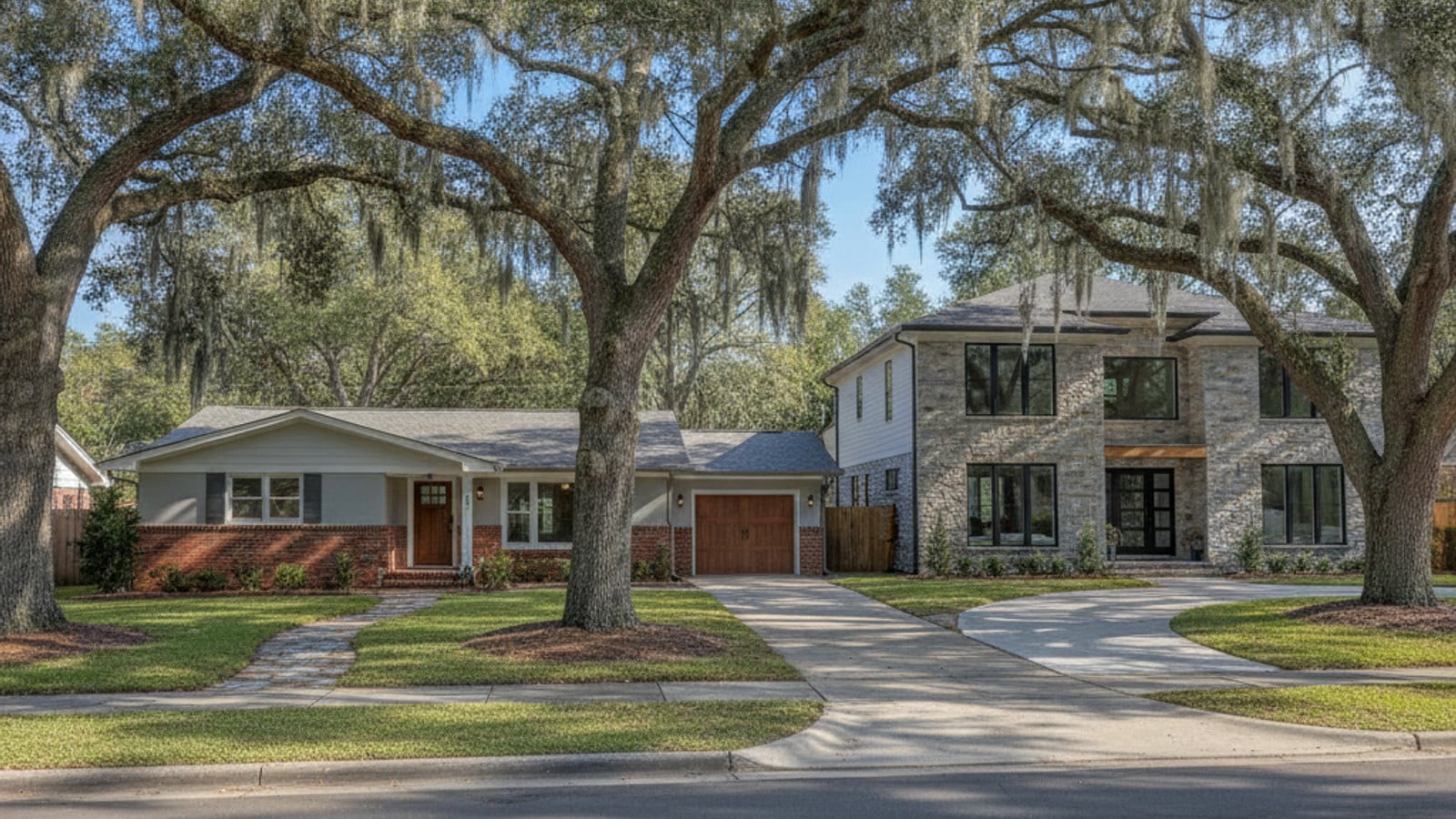
Mandarin sits along the eastern bank of the St. Johns River in the southern portion of Jacksonville, FL - large oak trees draped in Spanish moss, a handful of historic sites, and residential subdivisions stretching back from the water. It was the winter home of Harriet Beecher Stowe in the 19th century, which gives the area a historical footnote most of the best neighborhoods in Jacksonville can't claim, and it's grown steadily since into one of the city's major residential districts.
If you're looking at homes for sale in Mandarin Jacksonville, expect to pay a bit more than the citywide average. The tradeoff is established neighborhoods, waterfront properties, and services close enough that daily life doesn't require much planning. The rest of this guide covers what the housing stock actually looks like, what it costs, and what living here day-to-day entails.
An Overview of the Mandarin Area
Mandarin occupies the southernmost section of Duval County, with the St. Johns River along its western edge and Julington Creek to the south. It functions as a large residential district within the consolidated city of Jacksonville - not a separate municipality, just a defined community with a strong sense of place.
The layout isn't a dense urban grid. You'll find winding roads, residential subdivisions, and commercial corridors concentrated mostly along main arteries like San Jose Boulevard. The land use here is almost entirely residential, which means most residents drive to the commercial strips along those arteries for shopping and services. That rhythm defines daily life in Mandarin more than almost anything else.
Location and Housing Setting
The residential landscape is genuinely varied - mid-century single-family homes, riverfront estates, and newer developments all share the same zip code. Lots closer to the St. Johns River tend to run larger, sometimes significantly so, while the inland sections look more like standard suburban layouts.
Because the district is largely built out, the environment feels settled in a way that newer areas don't. Buyers often come here specifically for the mature landscaping and historical context, and that's a real differentiator from the master-planned communities you'll find further south.
Fitting Into the Broader Jacksonville Map
Mandarin sits between Jacksonville's urban core and the rapidly expanding suburban communities of northern St. Johns County. I-295 is your main artery out - it connects you to the Southside business district and the Jacksonville beaches without pulling you through downtown.
When you look at a broader Jacksonville neighborhoods guide, Mandarin stands out for its established character compared to the newer construction dominating areas further south. It's a different kind of neighborhood, and buyers tend to know which they want.
Real Estate and Home Prices in Mandarin
The Jacksonville real estate market as a whole is sitting at a median sale price of around $317,000, with homes spending roughly 59 days on the market. Mandarin runs higher than that. Local data shows median sale prices ranging from roughly $361,000 up to $530,000 over the past year, depending on the source and the specific segment of the market you're looking at.
A recent local realtor guide cites approximately $385,000 as a baseline for Mandarin in mid-2026. The premium over the city median reflects the area's lot sizes, river access, and the fact that these are established subdivisions - not new builds on raw land. Don't expect that gap to disappear.
Property Types and Housing Stock
Single-family homes dominate the housing stock here. You'll see 1970s ranch-style houses alongside large, custom-built homes along the riverfront. Townhomes and condominiums exist but represent a smaller share of what comes to market.
Lot sizes swing widely depending on the street. Homes closer to Mandarin Road can sit on acreage with deep setbacks, while properties in planned subdivisions have more standard suburban dimensions. It's worth knowing which category you're shopping in before you start comparing prices.
New Construction Versus Established Homes
New construction is less common in Mandarin than in neighboring St. Johns County - the area is largely developed, so most buyers are purchasing established homes. That usually means budgeting for updates to kitchens, bathrooms, older roofs, or HVAC systems. It's not a dealbreaker, but it belongs in your financial planning from the start.
Many of the established subdivisions have active Homeowners Associations. Review those HOA documents carefully before you commit - these organizations enforce binding rules on exterior modifications, parking, and property maintenance, and surprises there are avoidable ones.
Daily Life, Dining, and Getting Around
San Jose Boulevard is where most of the practical infrastructure lives. Grocery stores, fitness centers, retail plazas - major supermarket chains and big-box stores run multiple locations along this corridor. You won't need to leave the neighborhood for everyday errands.
That said, San Jose Boulevard gets congested during morning and evening commutes. Most residents factor that into their schedules, either timing their trips around the peaks or cutting over to I-295 to avoid the local backup.
Restaurants and Everyday Shopping
The dining scene in Mandarin Jacksonville runs toward everyday rather than destination. National chains, local diners, casual eateries - it's practical, not particularly distinctive. Strip malls and shopping centers cover pharmacies, banks, and specialty stores. For larger-scale retail, residents typically drive north to the St. Johns Town Center or other regional malls in Jacksonville.
Transit and Local Landmarks
Mandarin is car-dependent. Most residents drive to work and to amenities, full stop.
The area's most notable landmark is the Walter Jones Historical Park and Mandarin Museum, located at 11964 and 12471 Mandarin Road. The 10-acre park opened in 2000 and includes a riverfront boardwalk, a restored farmhouse, a sawmill, and a log cabin. The Mandarin Store and Post Office, built in 1911 and added to the National Register of Historic Places in 2001, anchors the site.
Schools, Healthcare, and Local Weather
School zones, medical access, and climate aren't exciting topics, but they drive a lot of housing decisions in Florida. The good news is Mandarin has straightforward access to all three, with several facilities sitting directly within the neighborhood's boundaries.
If you're relocating from out of state, it's worth getting familiar early with how county-level services work in Duval County and what the regional climate actually demands. Checking zoning and service maps before you're under contract is a lot easier than doing it after.
Duval County Public Schools
Mandarin is served by Duval County Public Schools. Mandarin High School, established in 1990, and Mandarin Middle School are the key zoned secondary schools. Several elementary schools serve the area, including Chets Creek Elementary.
School assignments are address-specific, so use the Duval County Public Schools attendance-zone maps to verify where any property you're considering actually falls - don't rely on general neighborhood assumptions.
Medical Centers and Hospitals
Emergency and urgent care options sit close by. HCA Florida Mandarin Emergency, a campus of HCA Florida Memorial Hospital, operates an 11,000-square-foot ER with 10 beds and pediatric emergency care. Memorial Hospital - Mandarin on San Jose Blvd, Ascension St. Vincent's Health Center - Mandarin, and Memorial Emergency Center Mandarin also serve the immediate area.
For major procedures or specialized care, larger facilities are accessible in Jacksonville - Ascension St. Vincent's Medical Center Southside, Baptist Medical Center, Wolfson Children's Hospital, and Mayo Clinic among them.
Climate and Seasonal Expectations
Mandarin Jacksonville weather follows a humid subtropical pattern. Summers are long, hot, and humid, with frequent afternoon thunderstorms from June through September. Winters are generally mild and short, with temperatures that rarely dip below freezing.
Hurricane season runs June 1 through November 30. Before you close, know your specific evacuation zone and make sure you understand what insurance coverage the property requires.
Finding a Home in the Area
There are roughly 4,227 homes currently in inventory across the broader Jacksonville market, which gives buyers options - but the localized supply in Mandarin tends to be tighter than those citywide numbers suggest. The average sale-to-list ratio in Jacksonville sits around 97.8%, meaning there's some room to negotiate, though extreme lowball offers don't go anywhere. Nearly 18.5% of homes still sell above list price across the city, so when you find a well-priced home in an established Mandarin subdivision, don't expect it to sit.
Buying Versus Renting
Mandarin Jacksonville homes for rent are an option if you want to test the area before committing. The rental inventory leans heavily toward single-family homes, with some apartment complexes along San Jose Boulevard rounding it out.
For buyers planning to stay long-term, purchasing tends to make more financial sense - particularly given the historical appreciation of riverfront and established properties here. Renting buys you flexibility; buying builds equity. Only you know which matters more at this point in time.
Working With a Local Agent
A local agent can tell you which specific subdivisions fit your budget and what you actually need, and they can pull recent comparable sales to evaluate whether a $385,000 or $530,000 asking price reflects what's happening on that particular block - not just the neighborhood at large.
They'll also help you work through HOA documents and the nuances of riverfront property regulations, neither of which you want to figure out on your own the week before closing. Accurate, current data matters when you're making an offer at this price point.
Frequently Asked Questions
Are property taxes and HOA fees generally higher in Mandarin compared to other parts of Jacksonville?
It depends on the subdivision. Mandarin's higher median home prices naturally result in higher total property tax bills compared to the $317,000 Jacksonville median, but HOA fees vary widely based on the specific community and its amenities.
What is the typical commute time from Mandarin to downtown Jacksonville or the local beaches?
It depends on your departure time. Residents rely on I-295 and San Jose Boulevard to reach the Southside business district, downtown, and the Jacksonville beaches, but heavy traffic on these routes during peak hours impacts the drive meaningfully.
Do homes in Mandarin typically require flood insurance due to their proximity to the St. Johns River?
It depends on the specific lot. Properties directly along the St. Johns River or Julington Creek often fall into designated flood zones requiring insurance, while homes further inland may not carry the same mandate.
Are older homes in the Mandarin neighborhood mostly on septic systems or connected to city sewer?
It depends on the property. Mandarin features a mix of mid-century single-family homes and newer developments, so verify with the seller or inspector whether a specific house uses a septic system or municipal sewer before you get too far down the road.
How does buying a home in Mandarin compare to nearby St. Johns County neighborhoods like Julington Creek?
Mandarin offers a more established setting with mature oak trees and a mix of mid-century and custom homes, whereas areas south of Julington Creek feature more recent, master-planned new construction. Mandarin is also part of Duval County Public Schools, while neighborhoods to the south fall under a different county district.
What are the local Jacksonville zoning restrictions for removing historic oak trees if I buy or renovate a property in Mandarin?
It depends on the property and city regulations. Mandarin is known for its mature tree canopy, and if you're planning to renovate an established home or clear any portion of a lot, consult Jacksonville municipal codes on the protection of historic trees before you assume you have a free hand.
Check out this article next