
Florida buyers tend to narrow things down fast. You're either drawn to the northeastern coast or you're looking inland toward the state's central hub. Anyone considering living in Jacksonville often looks at Orlando as the primary alternative. Jacksonville or Orlando - two different cities, two different housing markets, and a measurable gap between them in price, taxes, and how you'll actually spend your days.
That financial gap is real. In mid-2026, Jacksonville's overall cost of living runs roughly 5.7% to 10% lower than Orlando's, and most of that difference comes back to housing. But the purchase price is only one piece of it. Property taxes, everyday expenses, and local geography all factor into which city actually fits your budget and your life.
Deciding Between Jacksonville and Orlando
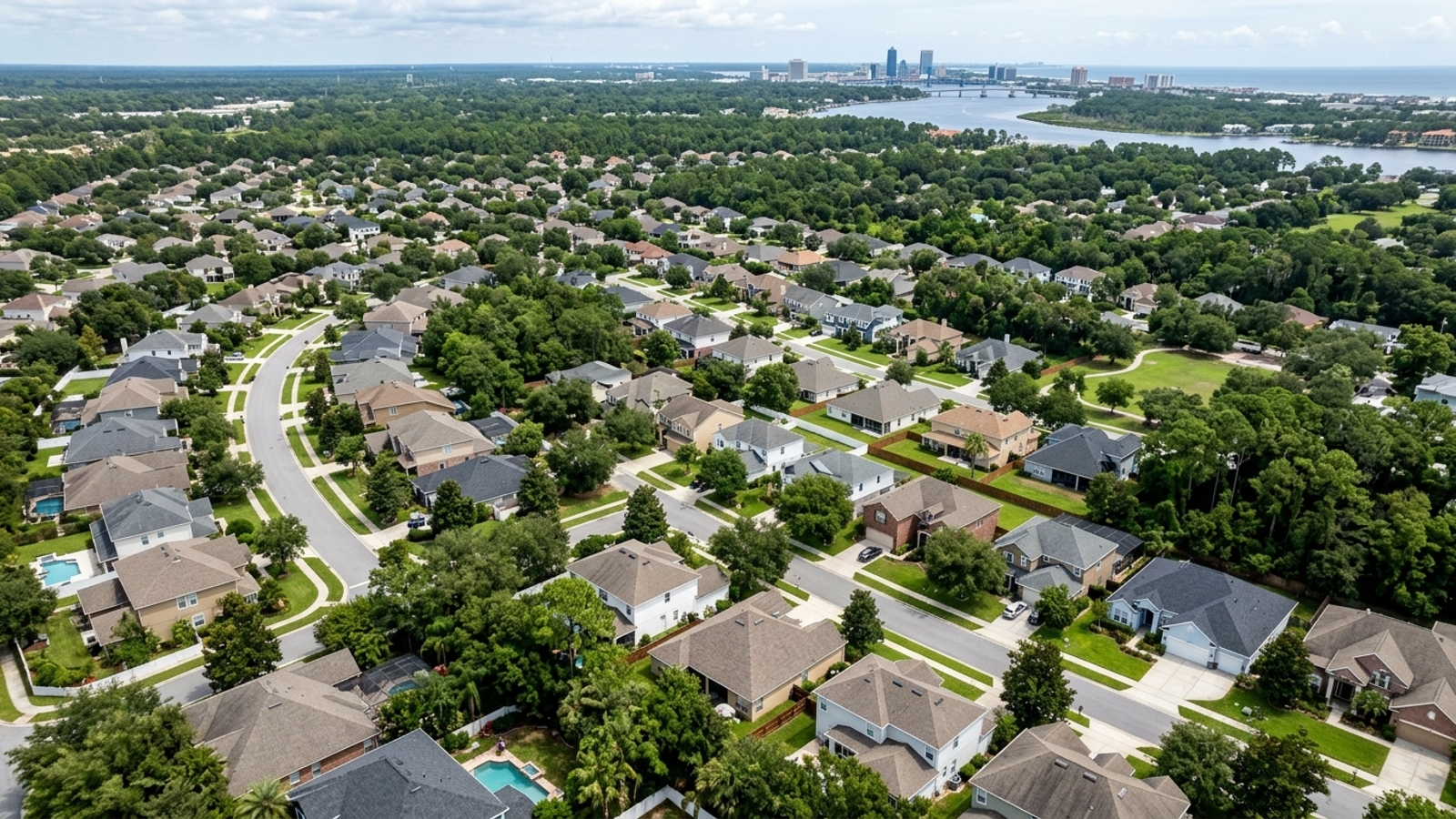
At the broadest level, this comparison comes down to housing inventory and geography. Jacksonville covers a massive land area in Duval County - buyers get coastal beaches and a wide network of suburban neighborhoods spread across that footprint. Orlando sits landlocked in Orange County, surrounded by inland lakes and a large tourism infrastructure.
Both cities benefit from Florida's lack of a state income tax, which draws a lot of out-of-state buyers to both markets. The trade-off usually centers on price versus location. Buyers who want lower median home prices and coastal access tend to land on Jacksonville. Buyers who want proximity to central Florida's tech sector and entertainment hubs focus on Orlando.
Housing Market and Home Prices
As of mid-2026, Jacksonville is the more affordable market. The median sale price sits at approximately $317,000, with homes spending roughly 59 days on the market before closing. There are about 4,200 active listings, which gives buyers nearly four months of supply to work with - that's meaningful breathing room.
Orlando commands higher prices. The median home price reached $385,000 in 2025 and has hovered around $376,000 through mid-2026. For a buyer working with a fixed budget, that difference often translates to a larger home or a larger lot in Duval County than you'd get in Orange County for the same money.
Sellers in Jacksonville are still doing well. The average sale-to-list ratio sits around 97.7%, and about 18.5% of homes sell above asking - so well-priced properties still draw multiple offers.
Typical Home Styles and Lots
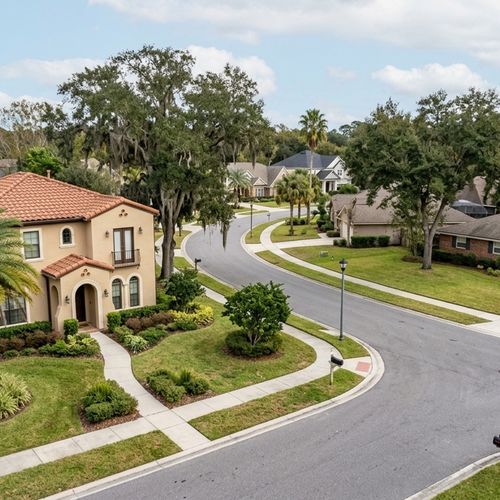
Jacksonville's geographic footprint gives buyers a wider range to choose from - coastal properties, inland suburban developments, older established neighborhoods, new construction communities. Lot sizes tend to be larger.
Orlando's inventory leans heavily toward master-planned communities. HOAs are common in both markets, but in most Orlando suburban developments, an HOA fee isn't optional - it's just part of the monthly budget. Budget for it accordingly.
Cost of Living and Local Taxes
Day-to-day expenses in Jacksonville run about 5.7% to 10% lower than in Orlando. Most of that gap comes from housing - a lower median home price means a lower monthly mortgage payment, which ripples through the rest of your budget.
Property taxes are worth running carefully before you make an offer. Florida has no state income tax, so local municipalities lean on property taxes to fund public services, and the rates vary more than most buyers expect.
Everyday Expenses
Beyond the mortgage, the differences in daily costs are real but not dramatic. Cost of living indices from Salary.com and Expatistan confirm that groceries, utilities, and transportation all tend to cost less in Jacksonville.
Orlando's higher cost of living reflects its position as a major international tourist destination. Neither city charges state income tax, but buyers relocating to Orlando should budget for slightly higher day-to-day expenses across the board.
Property Taxes in Duval and Orange Counties
As of the last finalized data from 2025, Duval County's total millage rate was about 17.86 mills, which works out to an effective property tax rate near 1.58% of the purchase price for a homesteaded property. Orange County's county-wide millage rate was slightly lower at roughly 16.67 mills, for an effective rate near 1.48%.
Here's where it gets important: buyers looking inside the Orlando city limits face a higher combined millage rate of about 18.1 mills. Crossing a city boundary changes your annual tax bill, sometimes significantly. Verify the exact tax boundaries of any property you're seriously considering - don't assume the county rate applies just because a listing says "Orlando area."
Climate, Geography, and Recreation
Jacksonville sits on the Atlantic coast. Orlando doesn't. That single geographic fact shapes almost everything else about how life in each city actually feels day to day.
Weather and Geography Differences
Both cities run hot in summer and mild in winter - standard Florida. Jacksonville's coastal position brings ocean breezes that moderate summer temperatures slightly compared to landlocked Orlando. Orlando's inland location keeps it out of the immediate coastal flood zones, though both cities deal with regular summer thunderstorms. Wherever you're buying, pull the flood zone maps and run the insurance numbers for that specific property before you fall in love with it.
Outdoor Activities and Entertainment
Jacksonville's lifestyle centers on its natural features - a large urban park system, coastal nature preserves, public beach access, and river activities along the St. Johns River. It's a city where the outdoors are genuinely part of how people live.
Orlando leans the other direction: unparalleled access to international attractions, resorts, and entertainment complexes. If dining, nightlife, and proximity to major tourist attractions matter to you, that points toward Orlando.
Employment and Commute Patterns
Jacksonville's massive land area means your commute depends almost entirely on where you choose to live relative to where you work. There's no single answer - it's a map exercise you need to do before you pick a neighborhood.
Orlando's employment picture features strong tourism and technology sectors, and the daily reality of that is the I-4 corridor. High traffic volumes from both local workers and tourists make the commute experience there genuinely variable. If you're relocating to Orlando, drive your actual route at your actual time of day before you decide where to live.
Frequently Asked Questions
Is it cheaper to buy a house in Jacksonville, FL or Orlando?
Yes. The median home price in Jacksonville is roughly $317,000 as of mid-2026, while Orlando's median home value sits closer to $376,000. Overall living expenses in Jacksonville also run roughly 5.7% to 10% lower than in Orlando.
How do property taxes in Jacksonville's Duval County compare to Orlando's Orange County?
It depends on the exact location. Duval County carries an effective rate near 1.58% for homesteaded properties, while Orange County's base rate is around 1.48%. Homes inside the Orlando city limits face a higher combined rate of about 18.1 mills - so the boundary of any specific property matters.
What are the biggest lifestyle and commute differences when relocating to Jacksonville versus Orlando?
For those relocating to Jacksonville, the city offers a coastal lifestyle with direct beach access and longer suburban commutes across a large county. Orlando is an inland, lake-oriented market with close proximity to major theme parks and daily traffic driven by the busy I-4 corridor.
Check out this article next