
If you’ve been watching the Florida real estate headlines lately, you’ve probably seen the eye-watering numbers coming out of Miami or West Palm Beach. It can make the dream of owning a slice of the Sunshine State feel a bit out of reach. But here is the good news: Jacksonville remains one of the last major coastal metros in Florida where affordability is actually still a reality. For a comprehensive look at the local real estate, explore the Jacksonville housing market.
As of early 2026, the market here has settled into a much more sustainable rhythm compared to the frenzy of the last few years. While prices have certainly risen over the decade, we aren't seeing the aggressive spikes that defined the post-2020 boom.
So, what does it actually cost to get keys in hand right now? The core statistic you need to know is the median home value, which currently sits between $280,000 and $305,000 for the greater Jacksonville area.
When you compare that to the statewide averages—and especially against Miami’s $500,000+ benchmark—it’s clear why so many people are still moving to Jacksonville. However, the sticker price is only one piece of the puzzle. Buyers in 2026 have to navigate a different landscape, specifically when it comes to insurance and interest rates, which we will break down below.
Jacksonville Housing Market Snapshot (Early 2026)
Before we get into neighborhood-specific pricing, it helps to understand the "temperature" of the market. If you were trying to buy here three or four years ago, you likely remember bidding wars and waiving inspections. I can happily tell you that those days are largely behind us.
Currently, we are shifting toward a balanced market, leaning slightly into a Buyer’s Market.
- Inventory is Healthy: For the first time in years, we are seeing inventory levels hover around 4 to 5 months of supply. This means you actually have options to choose from rather than fighting over the one decent house on the block.
- Time on Market: Homes are taking a breather. The average property is lingering on the market for about 50 to 70 days. This slower pace reduces the pressure to make a snap decision within hours of a listing going live.
- Negotiation is Back: Because homes aren't flying off the shelves, sellers are becoming more realistic. We are seeing significantly more willingness to cover closing costs, buy down interest rates, or accept offers slightly below the asking price.
In short, the leverage has started to swing back to you, the buyer.
Average Prices by Property Type
When people ask about the "average cost," the number can be misleading because a $5 million riverfront estate in Avondale skews the math for everyone else. It is much more helpful to look at what you get for your money based on the type of property you are eyeing.
Single-Family Homes: This is the standard driver of that median price we mentioned earlier. For a move-in ready, detached home in a safe area, you should budget between $300,000 and $350,000. If you are willing to do some cosmetic updates, you can certainly find options in the high $200s.
Condos: Condominiums are significantly cheaper upfront, with median prices often landing in the $200,000 to $220,000 range. However, a word of caution: the condo market has been volatile due to rising insurance premiums and stricter reserve requirements for associations. Always look closely at the monthly HOA fees—sometimes a "cheap" condo costs more monthly than a pricier house.
Townhomes: Townhomes have become the sweet spot for many first-time buyers and those downsizing. You get the lower maintenance lifestyle without the intense HOA risks of a high-rise condo. Expect to see prices ranging from $240,000 to $280,000.
New Construction: Builders are very active right now, especially in the southern and northern corridors of the county. While new builds command a premium, builders are aggressively competing with the resale market. They often offer incentives—like $10,000 toward closing costs or permanent rate buydowns—that can make the monthly payment on a new $400,000 home competitive with an older $350,000 home. If you're considering a new build, read our guide on how to build from scratch in Jacksonville.
Home Prices by Neighborhood: Where Can You Afford?
Jacksonville is the largest city by land area in the contiguous United States. Because it is so massive, "Jacksonville" prices don't really exist—neighborhood prices do. The cost of living in Jacksonville FL varies wildly depending on which side of the St. Johns River you choose.
Here is a breakdown of what you can expect to pay in different pockets of town.
Affordable Entry-Level Areas (Under $275k)
If you are looking for maximum value or your first home, these areas offer incredible bang for your buck.
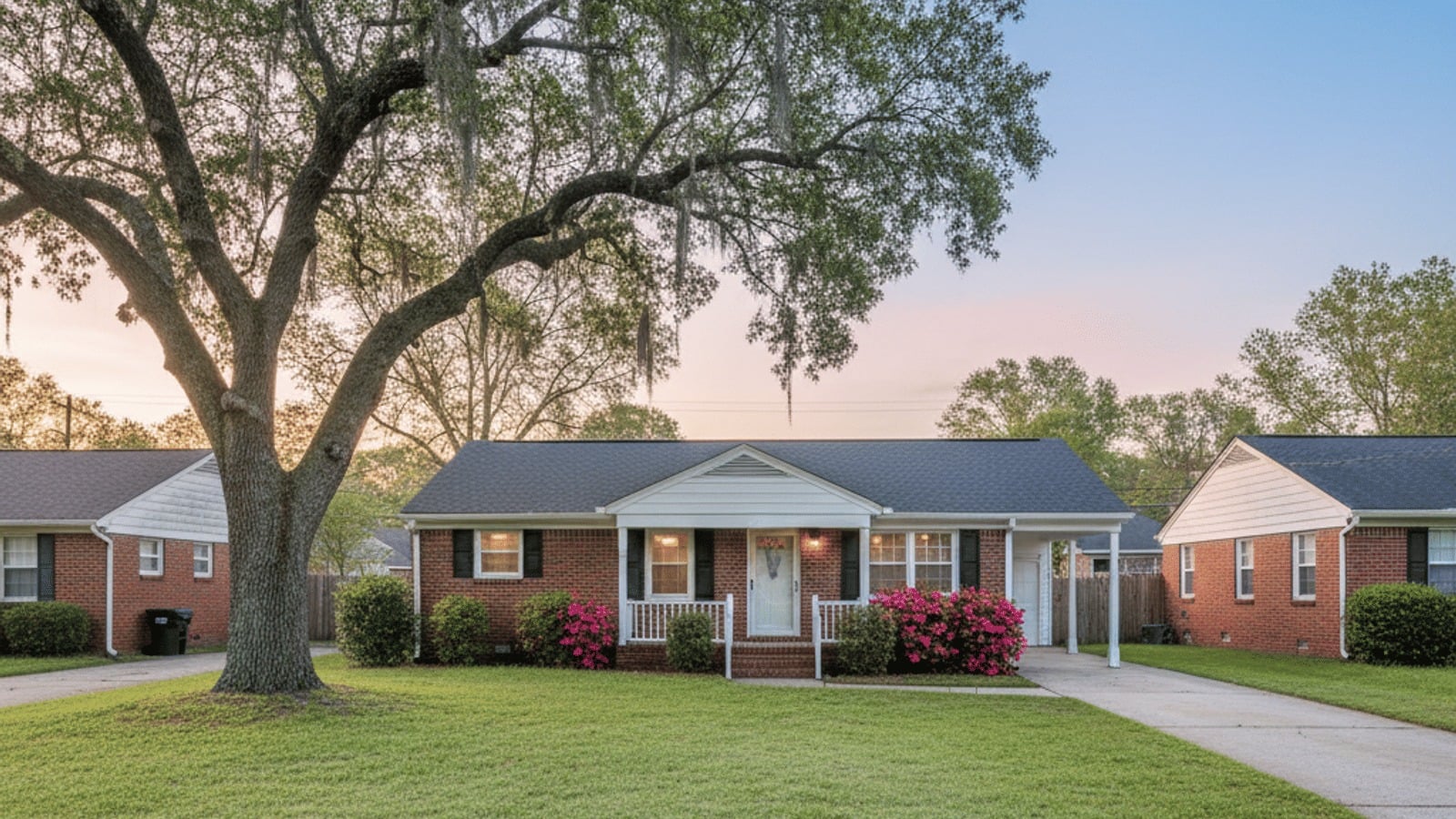
Arlington: This is one of the city's older suburbs, located just east of downtown. You can find solid mid-century brick ranch homes here with large yards. The median price hovers around $205,000. It’s a convenient location for commuters, though the housing stock is older.
Westside / Murray Hill: The Westside is vast and offers plenty of land. If you want a bit of acreage without breaking the bank, this is the spot. Closer to the urban core, Murray Hill has become a vibrant, artsy community with walkability to cafes and shops. While Murray Hill prices have risen, you can still find pockets of value compared to its more expensive neighbor, Riverside.
Northside: The Northside is experiencing immense growth near the airport and River City Marketplace. While there are new developments, the older established neighborhoods here remain very affordable, with median prices often sitting in the low $200s.
Mid-Range & Established Favorites ($300k – $550k)
This price bracket covers the most popular areas for move-up buyers and those relocating to Northeast Florida who want modern amenities and established communities.
Southside: This is the commercial hub of the city, close to the St. Johns Town Center. It offers a mix of condos and single-family homes, usually starting around $350,000. It’s central to everything, which keeps demand high.
Mandarin: Famous for its stunning old oak trees and river views, Mandarin has a traditional suburban feel. It is known for larger lots and a quiet atmosphere. Prices here have crept up, with the median pushing toward $507,000, though you can still find smaller homes in the $300s.
San Marco: Located just south of downtown, San Marco is rich in historic charm, featuring piazzas and boutique shopping. Prices vary heavily street-by-street. You might find a condo or small bungalow in the mid-$300s, but homes just a few blocks away toward the river easily reach the millions.
Luxury & Coastal Living ($600k+)
If your budget allows, these are the premium markets known for proximity to the ocean or the river.
The Beaches (Atlantic, Neptune, Jax Beach): Living east of the Intracoastal Waterway commands a premium. Inventory is always limited here. Neptune Beach is often the priciest of the trio, with median values around $725,000.
Ponte Vedra Beach: While technically just over the county line in St. Johns County, this is the primary luxury market for the metro area. Known for world-class golf and high-end dining, it is common to see homes starting at $1 million and going up significantly from there.
Riverside / Avondale: For those who prefer historic architecture over beach life, this is the pinnacle. The area features stunning riverfront estates and walkable parks. While you can find condos for less, the historic single-family homes generally command top dollar.
Beyond the Sale Price: The Real Cost of Ownership
If you are moving from out of state, there is a very specific conversation we need to have about your monthly budget. In Florida, the purchase price is only half the story.
Homeowners Insurance: This is the "wild card" of Florida real estate. Rates here are higher than the national average due to weather risks. For a typical single-family home, you should budget between $2,000 and $4,000 annually. If the home has an older roof (15+ years), obtaining insurance can be difficult or expensive. Always check the age of the roof before making an offer.
Property Taxes: Florida has a Homestead Exemption that can save you roughly $50,000 off the assessed value of your primary residence. However, be careful with online estimates. In Florida, property taxes "reset" when a home is sold. The previous owner might have been paying taxes on a much lower value because they lived there for 20 years. Your tax bill will be based on the price you pay. Expect to pay roughly 1% to 1.2% of the purchase price annually.
HOA & CDD Fees: If you are looking at newer master-planned communities like eTown or areas near Nocatee, you will likely encounter both HOA fees and CDD (Community Development District) fees. These pay for the elaborate amenities and infrastructure. Combined, these can easily add $100 to $500 per month to your housing expenses.
Utilities: Don't forget the AC bill. Air conditioning runs nearly year-round here. While electricity rates are generally reasonable, keeping a large home cool in August is a line item you need to plan for.
2026 Forecast: Will Prices Drop?
The big question on everyone’s mind is: "Should I wait for prices to crash?"
Most local experts and data analysts agree that a crash is highly unlikely. The consensus for 2026 is that home prices will remain relatively flat or see very modest growth (think +1% to +2%).
Why? Because migration to Florida is still strong. People want to live here. As long as inventory stays healthy—above that 4-month mark—buyers will keep their leverage, but sellers aren't desperate enough to drop prices drastically.
The smartest strategy right now isn't to wait for a price drop that might not happen. Instead, focus on the negotiation power you have now. Use the current market conditions to get the seller to pay for your closing costs or buy down your interest rate. That will save you more money monthly than waiting for the sticker price to drop another $5,000.
FAQ: Jacksonville Real Estate
What is the average home price in Jacksonville, FL right now?
In early 2026, the median home price in the Jacksonville metro area hovers between $280,000 and $305,000. We prefer using the median rather than the average, as multi-million dollar oceanfront properties tend to skew the "average" number higher than what a typical buyer would actually pay.
Is 2026 a good time to buy a house in Jacksonville?
Yes, primarily because the "frenzy" has ended. While interest rates and insurance are higher than in 2020, buyers currently have more leverage to negotiate repairs, closing costs, and price reductions than they have had in years. It is a much less stressful environment for shopping.
Which Jacksonville neighborhoods are the most affordable?
For single-family homes, the Arlington and Westside areas offer the best price-per-square-foot ratios, often featuring homes in the low $200,000s. The Northside also has pockets of very affordable starter homes, both new and existing.
How much are closing costs in Jacksonville?
Buyers should generally budget between 2.3% and 2.5% of the purchase price for closing costs. This includes lender fees, title insurance, recording fees, and pre-paid items like property taxes and homeowners insurance.
Why is housing in Jacksonville cheaper than Miami or Orlando?
Jacksonville has a massive amount of land availability compared to the dense, space-constrained markets of Miami and Orlando. This abundance of land allows for more urban sprawl and development, which helps keep housing supply higher and prices lower.
Check out this article next