
The broader Jacksonville real estate market moves at a steady pace - citywide median sale price sits around $317,000, and homes are spending roughly 59 days on the market. If you're searching for the best neighborhoods in Jacksonville within the 32217 ZIP code, you've probably run into two overlapping names: the broader San Jose area and the specific San Jose Forest subdivision.
They're not the same thing, and the distinction matters. San Jose refers to a long corridor stretching along the St. Johns River, while San Jose Forest is a distinct, smaller neighborhood tucked inside it. The two differ in housing inventory, price ranges, and architectural styles - so knowing which one you're actually looking at will save you a lot of confusion in the Southside and Mandarin districts.
Geographic Boundaries in Jacksonville, FL
The San Jose area covers a wide swath of Jacksonville, generally anchored by San Jose Boulevard - also known as State Road 13. That thoroughfare runs parallel to the St. Johns River, creating a long corridor of residential subdivisions, commercial plazas, and waterfront estates.
San Jose Forest is one specific residential subdivision sitting within that larger area. It's positioned just south off San Jose Boulevard, southwest of Greater Englewood and southwest of Powers Avenue. There's no single official platted boundary map for the broader area, but local sources consistently describe San Jose Forest as bordered by San Jose Boulevard to the east, placing it close to the eastern banks of the St. Johns River.
Proximity to Downtown and Commuting
San Jose Forest is about 15 minutes from Downtown Jacksonville, and San Jose Boulevard is the primary corridor for getting there from either location. From the main boulevard, you can connect to Interstate 95 without much trouble, which opens up the rest of Duval County fairly easily.
It's a practical setup if you work downtown but want something that feels more suburban when you get home.
Home Prices and the Real Estate Market
Property values in the broader San Jose neighborhood span a massive range - and that's not an exaggeration. Two-bedroom midcentury ranch homes can sell between $150,000 and $200,000, four-bedroom properties on larger lots frequently push past $300,000, and waterfront estate-style homes near the Epping Forest Yacht Club can reach upwards of $900,000.
Across the wider Jacksonville market, there's about 3.9 months of housing supply right now, with homes selling for roughly 97.8% of their list price. Because the broader San Jose area runs the full spectrum from entry-level ranches to luxury riverfront estates, the median price shifts noticeably depending on which specific subdivisions are seeing the most activity in a given month. Don't read too much into a single month's figure.
How San Jose Forest Prices Compare
San Jose Forest sits in a higher price bracket than the entry-level end of the broader San Jose area. Back in 2025, estimates put the median home value somewhere between $460,000 and $540,000, with Movoto reporting a median list price of $540,000 as of July 2025.
It's a small subdivision, though, and low sales volume creates real statistical volatility. Redfin data showed the median sale price spike to $715,000 back in February 2025 - that's what happens when a handful of high-end properties close in the same month. Individual property comparables will tell you far more than the neighborhood median here.
Architecture, Lot Sizes, and Neighborhood Rules
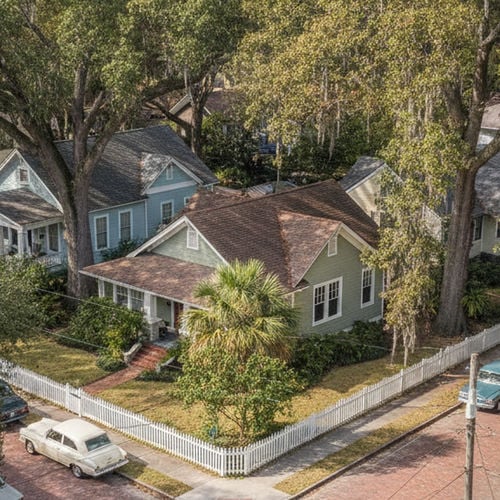
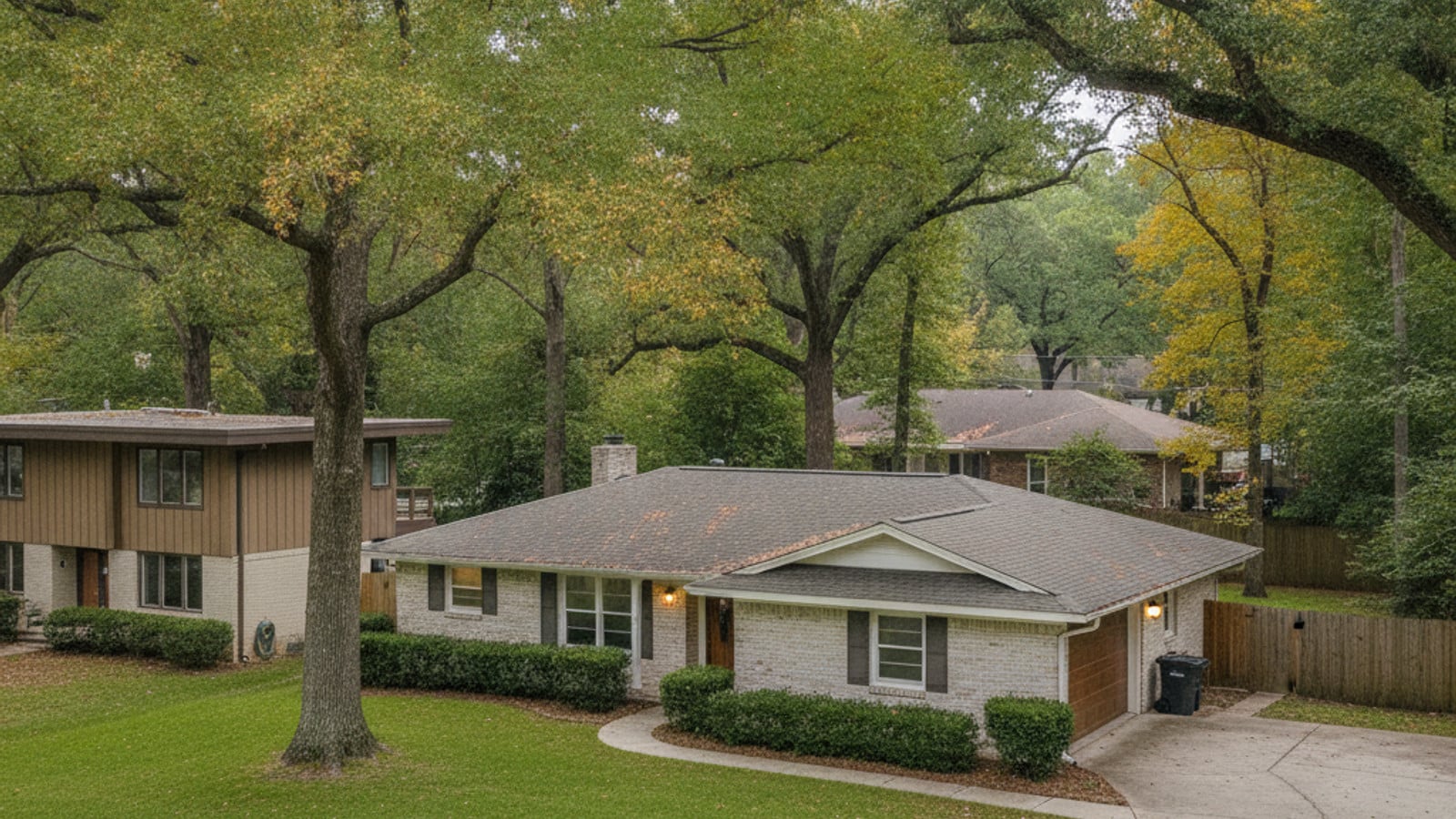
San Jose Forest is predominantly pre-1960s single detached homes - classic ranch homes, two-story designs, and some small apartment buildings. Certain pockets, like Mercer Circle, feature notable mid-century modern architecture that tends to attract buyers specifically looking for that style.
Lot sizes vary by location. Properties directly on San Jose Boulevard average about 34,430 square feet. Interior midcentury lots in the broader San Jose neighborhood tend to run smaller, while riverfront estate lots sit on roughly half-acre parcels.
HOA Fees and Neighborhood Associations
San Jose Forest doesn't have a mandatory Homeowners Association or fixed monthly fees. What it does have is a voluntary neighborhood association - one that hosts local events and accepts optional annual contributions rather than enforcing dues.
You own your home without binding HOA rules telling you what color to paint it. That's a meaningful difference from some of the gated waterfront communities elsewhere in the broader San Jose corridor, where mandatory fees and association rules are very much a reality.
Local Amenities and St. Johns River Access
Both the broader San Jose area and San Jose Forest itself sit close to parks, country clubs, and everyday conveniences. Verona Park offers green space for walks and picnics, and a local YMCA is within walking distance of many homes. The San Jose Country Club is a prominent landmark in the area, positioned near the river.
For dining and shopping, residents tend to head to spots like Mr. Gordo's Tacos and Cantina on University Boulevard West or 5 Star Pizza on San Jose Boulevard.
Nearby Schools and Districts
Properties in the 32217 ZIP code fall within the Duval County School District. The area sits close to several specific campuses, including the Alfred I. duPont School, and The Bolles School - a well-known private institution in Jacksonville - is also nearby.
School zoning can divide subdivisions in ways that aren't obvious from a map, so verify exact public school attendance zones directly with the Duval County School District before assuming a specific address feeds into a particular school.
Frequently Asked Questions
What are the main differences in home styles and neighborhood vibe between San Jose and San Jose Forest?
The broader San Jose area includes a wide mix of housing, from entry-level ranches to massive waterfront estates near the Epping Forest Yacht Club. San Jose Forest is a more uniform subdivision primarily featuring pre-1960s single detached homes, classic ranches, and mid-century modern architecture on streets like Mercer Circle.
How do median home prices and property taxes compare between San Jose and San Jose Forest in Jacksonville?
San Jose Forest generally sees median prices between $460,000 and $540,000, though low inventory can cause temporary spikes. The broader San Jose area offers a wider price range, with two-bedroom ranches starting around $150,000 and luxury riverfront estates exceeding $900,000. Property taxes in both areas are assessed by Duval County based on the individual home's assessed value.
Do homes in San Jose Forest have stricter HOA rules and higher fees compared to the broader San Jose area?
No. San Jose Forest doesn't have a mandatory HOA or fixed fees. The neighborhood has a voluntary association that accepts optional annual contributions, whereas some of the luxury gated communities in the broader San Jose area enforce mandatory dues and association rules.
Does buying a home in either neighborhood include access or membership to the San Jose Country Club?
No. The San Jose Country Club is a prominent landmark in the area, but buying nearby doesn't automatically grant membership. Residents interested in the club's amenities need to apply and pay for membership separately.
Which Jacksonville flood zones impact the riverfront properties in San Jose versus the heavily wooded lots in San Jose Forest?
Properties in the broader San Jose area that sit directly on the St. Johns River face different waterfront exposures than the interior, pre-1960s lots in San Jose Forest. Exact flood zones vary by parcel - consult Duval County flood maps for any specific property you're considering.
Are San Jose and San Jose Forest zoned for the exact same Duval County public schools?
Both areas fall within the Duval County School District and are located near the Alfred I. duPont School. That said, the broader San Jose area covers a large geographic footprint along San Jose Boulevard, and specific public school zoning can vary from street to street.
Check out this article next