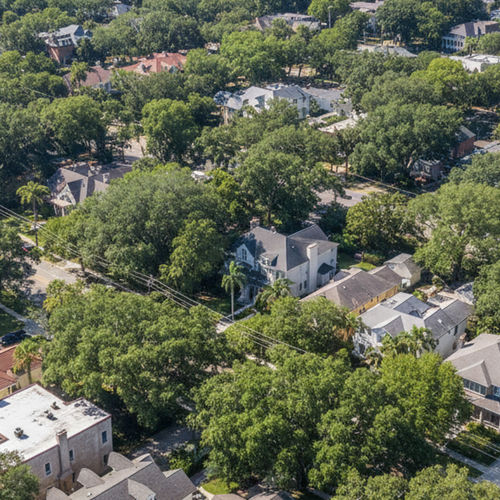

Mandarin sits on the eastern bank of the St. Johns River in the southern portion of Duval County. The neighborhood spans several ZIP codes, including 32223, 32257, and 32258, offering a distinct environment compared to the coastal beaches or the dense downtown core. Buyers looking at the Jacksonville real estate market often focus here for the established tree canopy and direct river access.
The area holds a mix of historic sites, mature subdivisions, and commercial stretches that support daily living. It provides a suburban layout while maintaining functional connections to major employment centers via the interstate system. This combination of geography and infrastructure makes it a practical option for buyers evaluating properties in Northeast Florida.
The 2026 housing landscape here remains active, with steady demand from buyers who want larger lots without moving entirely out of the county. While newer construction dominates the southern edge of the city, this neighborhood appeals to those who prefer established communities. The mature landscaping and lack of uniform, mass-produced streetscapes continue to drive property values.
History and Geography of the Neighborhood
The community dates back to the 1830s when it operated as a farming village known for its namesake fruit, the Mandarin orange. Agricultural operations dominated the local economy for decades, shipping citrus up the river to larger markets. A severe freeze in the late 1890s destroyed most of the commercial groves, prompting a slow shift toward other industries and eventually residential development.
Author Harriet Beecher Stowe maintained a winter residence here in the late 19th century, drawing early national attention to the settlement. She wrote extensively about the local landscape, and her presence helped establish the area as a winter retreat for northern visitors. The agricultural roots eventually gave way to modern housing tracts, though the area retained much of its original foliage.
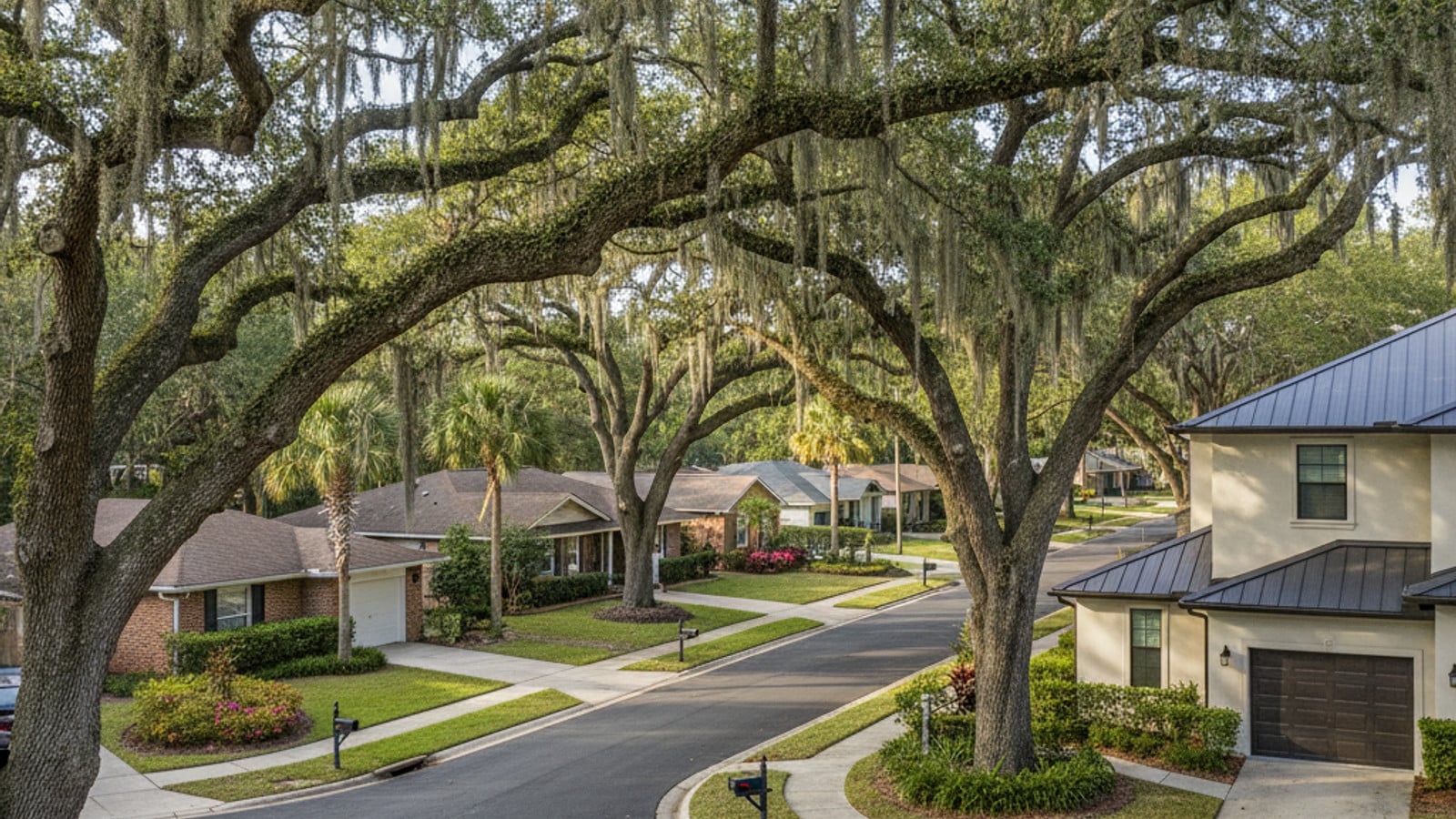
Large oak trees draped in Spanish moss line many of the older roads, particularly along the riverfront. This dense canopy provides shade and defines the visual character of the community, setting it apart from newer, clear-cut developments. The preservation of these mature trees remains a priority for local conservation groups and homeowners.
The physical layout centers around San Jose Boulevard, which runs north to south through the middle of the neighborhood. Side streets branch off this main artery, leading toward the St. Johns River to the west and towards major highway interchanges to the east. This grid directs commercial traffic away from the quieter residential enclaves.
Housing Options and Current Market Prices
The median home sale price in Mandarin sits around $385,000 as of Q2 2026. Data from the Northeast Florida Association of Realtors shows that homes here move at a steady pace, often spending fewer days on the market than the broader Jacksonville average. The housing supply ranges from mid-century ranch homes to modern townhomes, providing options across multiple price points.
Buyers will find a clear divide between property styles based on location. Mandarin Road features large, custom-built estates situated directly on the St. Johns River, often carrying price tags well above the local median. These waterfront properties frequently include private docks, boat lifts, and expansive acreage.
Further inland, the inventory shifts to traditional single-family homes built between the 1970s and early 2000s. Some of these sit in older, established subdivisions without homeowner associations, giving owners more flexibility regarding property modifications. Other homes belong to newer, HOA-managed communities that maintain shared amenities like community pools and tennis courts.
Lot sizes in the older sections tend to be larger than those found in modern developments, often exceeding a quarter-acre. Because the neighborhood borders the river and several creeks, buyers should verify the flood zone status of any property they consider. Homes located in designated flood hazard areas require flood insurance if purchased with a standard mortgage.
Buyers should factor potential HOA dues into their monthly housing budget when looking at these newer developments. Property taxes are assessed by Duval County, and buyers should verify exact tax rates based on the specific parcel. Unlike neighboring St. Johns County to the south, Duval County applies a different millage rate, which impacts the total monthly carrying cost of the property.
Drive Times to Downtown and NAS Jacksonville
Commuters traveling from Mandarin to Downtown Jacksonville generally face a 25 to 40-minute drive, depending on the time of day. San Jose Boulevard serves as the primary route for local traffic, funneling drivers toward Interstate 295. From there, residents connect to Interstate 95 north to reach the central business district.
Traffic volume peaks during the morning school drop-off window and the late afternoon rush hour. Planning trips outside these windows reduces travel time, especially near major intersections along the Boulevard. The Florida Department of Transportation continually monitors these corridors to adjust signal timing.
Military personnel and civilian contractors working at Naval Air Station Jacksonville (NAS Jax) have a direct commute from this side of the river. The drive requires crossing the St. Johns River via the Buckman Bridge, a major infrastructure span that connects the southern loop of I-295.
While most residents rely on personal vehicles, the Jacksonville Transportation Authority (JTA) operates bus routes along the main commercial corridors. For weekend trips, drivers can reach the Atlantic Ocean beaches in about 35 to 45 minutes by taking I-295 east toward the coast.
Typical commute routes from the center of the neighborhood include:
Downtown Jacksonville: 25 to 40 minutes via I-295 and I-95 North.
NAS Jacksonville: 15 to 20 minutes heading west across the Buckman Bridge.
St. Johns Town Center: 20 to 25 minutes via I-295 East, providing access to the region's largest retail hub.
Local Parks and St. Johns River Access
The 10-acre Walter Jones Historical Park sits on the riverfront, offering a look at a restored 19th-century farmhouse and barn. The property operates as a public park, allowing visitors to walk the grounds and view the remaining structures from the area's agricultural era. A boardwalk extends through the wetlands, providing clear views of the St. Johns River.
The Mandarin Museum operates on the same grounds, preserving artifacts from the neighborhood's early settlement. The museum houses exhibits related to Harriet Beecher Stowe and the Union steamship Maple Leaf, which sank nearby during the Civil War. These historical resources provide context for the physical development of the surrounding streets.
Mandarin Park provides a different set of recreational facilities for residents focused on active use. The grounds feature multiple playgrounds, paved walking trails, and open green spaces for sports. The park serves as a central gathering point for outdoor activities throughout the year.
Water access is a major draw for the area, and public facilities support boating and fishing. The local waterways also provide opportunities for wildlife observation, with manatees and various native bird species frequenting the shallow coves. Several locations offer direct entry points to the water:
Mandarin Park Boat Ramp: Provides direct launch access into the St. Johns River for motorized vessels.
County Dock: Features a public fishing pier extending into the water, accessible without a boat.
Julington Creek: Serves as a popular spot for kayaking and paddleboarding along the southern border.
Inland, Losco Regional Park offers paved trails, sports fields, and a splash pad. This facility provides an alternative for outdoor recreation away from the immediate riverfront, giving residents multiple options for weekend activities.
Duval County Public School Assignments
The Duval County Public Schools district operates several campuses within the 32223, 32257, and 32258 ZIP codes. The district manages public education for the entirety of the county, utilizing a mix of neighborhood zones and specialized magnet programs. Students living in the area are typically assigned to specific buildings based on their geographic location.
Mandarin High School and Mandarin Middle School serve as the primary secondary education centers for the neighborhood. These campuses handle the majority of the older student population in the southern portion of the county. Both schools offer various academic tracks, including advanced placement courses and career-focused electives.
Younger students are zoned for various local campuses, including Mandarin Oaks Elementary and Crown Point Elementary. Each elementary school maintains its own attendance zone, which dictates where incoming kindergarteners and transfer students will enroll. The district provides transportation for students who live beyond a certain distance from their assigned building.
Beyond the standard neighborhood assignments, Duval County utilizes a magnet lottery system. This allows parents to apply for specialized programs at schools outside their immediate geographic zone. The district provides resources and application timelines on its official portal each spring.
The school board occasionally adjusts these boundary lines to accommodate population shifts and new housing developments. Homebuyers should verify their specific street address with the Duval County Public Schools transportation office before finalizing a property purchase. Relying on outdated zoning maps can lead to unexpected school assignments for the upcoming academic year.
Retail Corridors and Local Restaurants
San Jose Boulevard holds the highest concentration of retail businesses and dining establishments in the area. This multi-lane commercial stretch features regional grocery store chains, pharmacies, and daily convenience shops. Residents do not need to leave the neighborhood to fulfill routine shopping needs, as the corridor supports a high volume of retail activity.
The dining scene consists of a mix of national restaurant brands and locally owned establishments. Independent cafes, barbecue joints, and seafood restaurants operate in the plazas lining the main road. The proximity to the river influences local menus, with several establishments focusing on regional coastal cuisine.
Several large shopping centers anchor the major intersections along the boulevard. These plazas offer fitness centers, medical offices, hardware stores, and specialty retail shops. The commercial density provides employment opportunities and tax revenue for the broader county.
The commercial footprint drops off quickly once you turn onto the residential side streets, maintaining a clear separation between business and housing districts. This zoning structure prevents heavy retail traffic from spilling into the quieter neighborhood roads, preserving the residential feel of the inland blocks.
Frequently Asked Questions
Is Mandarin a distinct city or part of Jacksonville?
Mandarin operates as a neighborhood within the City of Jacksonville, not as an independent municipality. It falls under the jurisdiction of Duval County, FL for all local government services, zoning, and property taxes.
How much does it cost to buy a house in Mandarin, FL?
As of mid-2026, the median home sale price in the area is approximately $385,000. Prices vary widely based on location, with inland townhomes selling below that mark and riverfront estates commanding well over $1,000,000.
Does Mandarin have public access to the St. Johns River?
Yes, the neighborhood maintains public access points for water activities. Mandarin Park features a public boat launch for motorized vessels, while the County Dock offers a pier for fishing and observing the river.
Check out this article next