
If you are looking for homes for sale in Northeast Florida, you have likely realized that the border between Jacksonville and Orange Park is more than just a line on a map. It is the dividing line between Duval County and Clay County, and crossing it changes everything from your morning commute to your annual tax bill.
For many newcomers, these two areas can blur together. You might work in Jacksonville but find yourself looking at houses just a few miles south. However, Orange Park isn’t just a neighborhood of the bold new city of the South; it is a distinct town with its own government, vibe, and rules. The choice usually comes down to a classic trade-off: do you want the urban amenities and beach access of the big city, or the dense, suburban feel of Clay County where your dollar might stretch a little differently?
Both areas are incredibly popular for military families, especially given the close proximity to NAS Jacksonville. The base sits practically right on the border, meaning you can live in either municipality and have a manageable drive to the gates. But before you sign a contract, let’s break down the real numbers and lifestyle differences.
Cost of Living & Taxes: The Millage Rate Difference
Let’s get right to the financials, because this is usually the deciding factor for buyers sitting across the desk from me. While home prices fluctuate, the biggest distinct difference between these two areas is the property tax structure. Generally speaking, living in Orange Park (Clay County) offers a distinct advantage when the tax bill comes due.
The magic word here is "millage." Clay County generally operates with a lower millage rate—often hovering around 15.8 mils—compared to Duval County, which is usually closer to 19.7 mils. To put that in real terms, if you buy a home assessed at $300,000, you could be looking at a savings of roughly $1,200 a year just by being on the Clay County side of the line. Over the life of a 30-year mortgage, that adds up significantly.
However, the sticker price of the homes themselves tells a slightly different story. Because Jacksonville is massive—the largest city by land area in the contiguous U.S.—it has a huge variety of inventory. You can find fixer-uppers for under $200K or riverfront estates for $5M. This variance often makes the median home price in Jacksonville appear lower than in Orange Park, where the housing stock is more consistent, established suburban inventory.
Another line item for your budget is utilities. If you live in Jacksonville, you are likely on JEA. If you move to Orange Park, you will likely be served by Clay Electric. Locals often cite Clay Electric as being slightly more affordable and reliable, which is a nice bonus on top of the tax savings. When you factor in everything, the overall cost of living in Jacksonville is technically about 4.4% lower due to those cheaper housing options, but for comparable homes, Orange Park often wins on monthly carrying costs.
School Districts: Clay County vs. Duval County
For years, the narrative in local real estate was simple: "Clay County for schools, Duval for convenience." If you are reading older articles or forum posts, you will see this repeated constantly. However, if you are looking at living in Jacksonville today, you need to know that the gap has closed significantly.
Clay County District Schools have historically been a powerhouse. They are consistently "A" rated and were recently ranked #4 in Florida by Niche for 2026. Schools like Ridgeview High and Orange Park High have strong community support and offer that classic suburban school experience. For families who prioritize stability and a long track record of performance, Clay County remains a very strong draw.
But here is the news that hasn't made it to everyone yet: Duval County Public Schools recently achieved an "A" district grade for the 2025-2026 school year. This is a historic achievement and reflects a massive effort to improve performance across the board. While Duval is huge and performance can vary from neighborhood to neighborhood, the district is home to some of the nation's best magnet schools, such as Stanton College Preparatory School and Paxon School for Advanced Studies. The choice is no longer about "good vs. bad," but rather about whether you prefer the consistent neighborhood zoning of Clay or the magnet/choice options available in Duval.
Commuting & Traffic: The Battle of Blanding Boulevard
We have to talk about Blanding Boulevard. If you buy a house in Orange Park, Blanding Boulevard will become a central character in your life, and not always a friendly one. This road is the primary artery running through Clay County and into Jacksonville, and it is prone to significant congestion.
If you work in Downtown Jacksonville, the commute from Orange Park is roughly 15 to 20 miles. On a clear Sunday morning, that’s a breezy 25-minute drive. During rush hour, however, you need to be prepared for that time to double. The "bottleneck" effect as traffic merges onto I-295 or heads north toward the base can be frustrating. While there are back roads, the volume of cars in Orange Park has grown faster than the road infrastructure in some areas.
Public transportation is another differentiator. Jacksonville has the JTA, which, while spread out, offers a fairly comprehensive bus network. Clay County does have "Clay Community Transportation," but it is much more limited. If you choose Orange Park, you are almost certainly going to rely on your car for everything from commuting to grocery runs.
Crime Rates & Neighborhood Safety
When discussing safety, it is important to look at the data rather than relying on hearsay. Because Jacksonville is a major metropolitan hub with a high population density, its violent crime rates per capita are statistically higher than the national average. However, "Jacksonville" covers hundreds of square miles. Safety is highly neighborhood-dependent; one street can feel completely different from the next.
Orange Park generally reports lower violent crime rates compared to the metro center of Jacksonville. It offers a quieter, more homogenous environment that many people find reassuring. However, no area is immune to crime. In Orange Park, the statistics are often skewed by property crimes—specifically theft—concentrated around retail hubs like the Orange Park Mall and the big-box stores on Blanding.
When you are scouting locations, it is smart to look at crime mapping tools for the specific subdivision you are interested in. In Orange Park, you will find that most residential cul-de-sacs are very quiet, while the busy commercial corridors deal with the majority of the police reports. In Jacksonville, you have to be more specific about which part of town you are analyzing.
Lifestyle & Amenities: River City vs. Small Town Feel
This is where the emotional side of the decision comes in. What do you want your weekends to look like?
Jacksonville is the "River City," but it’s also a beach city. If you live in Jacksonville—especially on the Southside or Intracoastal West—you are significantly closer to the ocean. You have easy access to the Jacksonville Jaguars games at EverBank Stadium, the vibrant nightlife in Riverside and San Marco, and a burgeoning foodie scene that is gaining national attention. It’s a place for people who want variety, energy, and options.
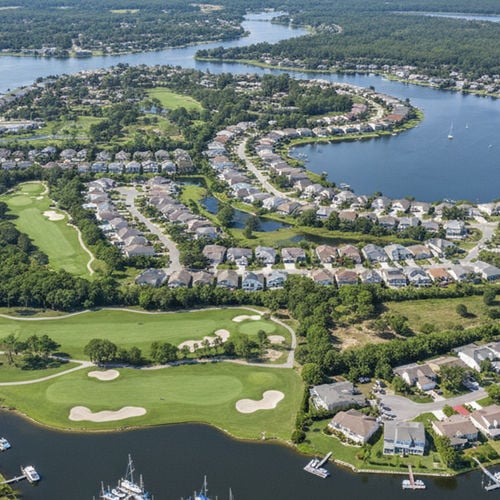
Orange Park, by contrast, embraces a slower pace. It sits beautifully along the St. Johns River and Doctor's Lake, making it a haven for boaters and people who love water views without the beach price tag. The vibe here is more "small town." You have community staples like the annual Fall Festival which shuts down the main drag, and local favorites like The Urban Bean for coffee or Grumpy’s for breakfast. While you have the Orange Park Mall and plenty of chain restaurants, the nightlife is quieter. It’s the kind of place where Friday night means a high school football game or a dinner at a local fish camp rather than a club or a rooftop bar.
Frequently Asked Questions
Is Orange Park considered part of Jacksonville?
Technically, no. While locals often group them together as part of the greater "First Coast" metro area, Orange Park is an incorporated town located in Clay County. Jacksonville is the consolidated city-county government of Duval County. They have different mayors, police forces, and tax collectors.
Is it cheaper to live in Jacksonville or Orange Park?
It depends on how you measure it. Jacksonville often has lower upfront home prices due to a wider variety of inventory, which can mean a lower mortgage. However, Orange Park generally has lower property taxes and often cheaper utilities, which can make the monthly cost of living lower for a comparable middle-class home.
How far is Orange Park from the beach?
Orange Park is an inland, riverfront community. Depending on traffic and where exactly you live in Orange Park, it will take you between 30 to 45 minutes to drive to Jacksonville Beach or Ponte Vedra Beach.
Which location is better for military families stationed at NAS Jax?
Both are excellent choices, as NAS Jacksonville is located in the Ortega/Yukon area, right on the Duval/Clay border. Orange Park is often preferred by those wanting a slightly shorter commute that avoids the Buckman Bridge, while Jacksonville offers more options for those who want to live closer to the city center or the beaches.
Check out this article next