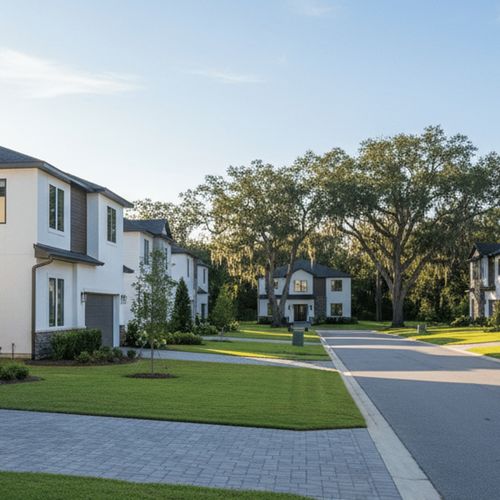


If you were looking at the Jacksonville market a few years ago, you likely remember the frenzy. It was a time of multiple offers, sight-unseen bidding wars, and rapid-fire price hikes. But as we settle into February 2026, the landscape has shifted. We aren't in the "wild west" anymore; Jacksonville has matured into what I like to call Florida's "Steady Eddie." If you're interested in understanding the current trends and making informed decisions, explore the Jacksonville housing market in detail.
The market has stabilized significantly. Inventory is ticking up, giving buyers a bit of breathing room, and price growth has normalized to a sustainable 1–3% year-over-year. We are seeing median home prices settle around the $375,000 to $400,000 range for decent inventory. While interest rates are softening compared to the highs of 2024 and 2025, the real draw here isn't just cheap financing—it's the fundamentals.
Investors are flocking to Duval County not for the tourism hype you see in Orlando, but for the boring, reliable drivers: logistics, healthcare, and military presence. With the Port of Jacksonville expanding and the Mayo Clinic continuing to grow, the tenant base here is employed and steady. If you are looking to build a portfolio based on logic rather than speculation, you are in the right place.
Why Invest in Jacksonville? Macro Economic Drivers
So, why are people still moving here? It really comes down to the economic pillars that keep the city running regardless of national headwinds. Unlike markets that rely heavily on discretionary tourist spending, Jacksonville has a diversified economy that provides a safety net for landlords.
First, look at the population growth. We are seeing steady net migration from higher-cost states in the Northeast and Midwest. People are moving here for the lifestyle, sure, but mostly for the jobs. The local economy is anchored by heavy hitters like the Naval Air Station Jacksonville, a massive logistics sector driven by the Port, and a booming Fintech industry. These sectors employ long-term residents, not just seasonal workers.
Then there is the affordability gap. Even with the price increases we saw over the last five years, Jacksonville remains significantly cheaper than its southern neighbors. You can buy a solid single-family home here for 30% to 40% less than you would pay in the Miami or Fort Lauderdale metro areas. For tenants, that affordability means they stay longer. For investors, it means a lower barrier to entry for a major coastal city. To understand the average home cost in Jacksonville, refer to our detailed analysis.
2026 Rental Market Data: Rents, Yields, and Vacancy
Let’s talk numbers. If you are running a rental property calculator, you need realistic inputs for 2026. The days of double-digit rent growth are behind us, but the baseline is strong.
Rents have cooled slightly from their peak, but they haven't crashed. For a standard 3-bedroom single-family home, you can expect average rents to land between $1,775 and $1,900 per month. Vacancy rates are healthy, hovering around the 5% to 6% mark. However, you need to be aware of a shift in inventory. We are seeing more Build-to-Rent (BTR) communities coming online in the suburbs. These brand-new subdivisions compete directly with older rental stock, so your property needs to be clean, updated, and priced correctly to compete. You can learn more about new home developments in Jacksonville on our site.
When it comes to cash flow, reality has set in. It is much harder to find those "1% rule" deals (where monthly rent is 1% of the purchase price) in good neighborhoods. Most realistic investors in 2026 are aiming for cap rates in the 6% to 8% range. The play right now is a balanced approach: decent immediate cash flow paired with the moderate appreciation we expect as the city continues to build out.
Best Neighborhoods to Invest in Jacksonville (By Strategy)
One of the most common mistakes out-of-state investors make is treating "Jacksonville" as one big blob. It is actually the largest city by land area in the contiguous U.S., and the strategy changes drastically depending on which zip code you pick.
For Cash Flow: The Westside & Northside
If your primary goal is monthly yield, look to the Westside and parts of the Northside. These are traditional working-class areas where entry prices are lower—typically $280,000 to $330,000. Because the purchase price is lower but rents remain strong, these areas often offer the highest rent-to-price ratios. You might see yields closer to 0.7% monthly here. The trade-off is often older housing stock that requires thorough inspection, but the tenant demand is incredibly consistent.
For Appreciation: Riverside, Avondale, and San Marco
If you are playing the long game and want stability and value growth, you look at the historic neighborhoods. Riverside, Avondale, and San Marco are filled with character, walkability, and charm. You will pay a premium here, with entry prices often exceeding $400,000 or $450,000. You likely won't see incredible cash flow on day one, but these areas hold their value exceptionally well during downturns and tend to appreciate faster when the market runs.
For Low Maintenance: Clay County / Oakleaf
Technically, this spills over the Duval County line, but the Oakleaf Plantation area is massive for investors who prefer newer construction vs resale. The schools in Clay County are a major draw for long-term tenants. While taxes and fees can be higher here (more on that in a moment), the homes are newer, meaning fewer 2 a.m. calls about a leaking roof or a busted pipe.
The "Gotcha": Short-Term Rental Regulations in Jacksonville
This is the section where I have to burst some bubbles. If you are planning to buy a standard suburban house and list it on Airbnb or VRBO for weekend stays, you need to stop and read the zoning map.
Jacksonville has strict rules regarding short-term rentals (defined as stays of less than 30 days). In the vast majority of Residential Low Density (RLD) zones—which is most regular neighborhoods—rentals under 30 days are effectively banned. You generally need to be in a Commercial (CCG) zone or specific Historic Core zones to operate a legal vacation rental. Even then, you must apply for a Short-Term Vacation Rental Certificate.
However, there is a very profitable loophole: the mid-term rental strategy. Because of the heavy military presence and the Mayo Clinic, there is massive demand for furnished rentals of 30 days or more. These medium-term stays bypass the restrictive short-term zoning laws and often attract high-quality tenants like traveling nurses or officers on temporary assignment.
Financial Breakdown: Taxes, Insurance, and Fees
Florida is famous for having no state income tax, but the government still gets its money. If you don't account for the "silent killers" in your budget, your cash flow will evaporate.
Insurance is the big one. While the insurance market is stabilizing in 2026, premiums are still a shock to investors from other states. For an older home, you might be looking at $2,500 to over $6,000 annually, depending on the age of the roof and the location. To keep this cost down, you must get a "Wind Mitigation Inspection." This report proves your roof and shutters are up to code and can save you huge amounts on your premium.
Property Taxes are tricky. Do not look at the current seller's tax bill on Zillow. In Florida, property taxes are capped for residents (Save Our Homes Act). When you buy the property, that cap lifts, and the taxable value resets to the purchase price. As an investor, you should estimate your property taxes at roughly 1.7% to 2% of your purchase price annually to be safe.
Watch out for CDD Fees. If you are buying in a newer master-planned community (like Oakleaf or Nocatee), you will likely have a CDD (Community Development District) fee on top of your HOA. This pays for infrastructure like roads and pools. It can add hundreds of dollars to your monthly holding costs, so always verify the total monthly fees before making an offer. Learn more about HOA fees in Jacksonville and how they can impact your investment.
Risks and Challenges for 2026
I'm bullish on Jacksonville, but I believe in transparent investing. There are real risks you need to mitigate.
Climate and Water: It’s not just the beach you have to worry about; it’s the St. Johns River. Flooding can happen in zones that look dry on a map. Lenders are becoming very cautious, often requiring flood insurance even in "X" zones (low risk). Always check the flood factor before you fall in love with a property.
Insurance Eligibility: We mentioned cost, but eligibility is another hurdle. If a home has a roof that is older than 15 years, many insurance carriers simply won't write a policy, or they will force you to replace the roof immediately. When you are calculating your rehab budget, look at that roof age first.
Institutional Competition: While the market has cooled, hedge funds and institutional buyers are still active in Jacksonville, particularly in that "starter home" price bracket. They often pay cash and can close in days. To compete, you need to have your financing rock-solid and be ready to move quickly when a good deal hits the MLS.
Frequently Asked Questions
Is Jacksonville a good place to invest in real estate in 2026?
Yes, provided you are looking for stability rather than rapid appreciation. The market has normalized into a "Steady Eddie" environment with consistent population growth driven by jobs in logistics and healthcare, making it a safer bet than more volatile coastal markets.
What are the property taxes for investors in Duval County?
Investors should budget approximately 1.7% to 2% of the purchase price for annual property taxes. Remember that as an investor, you do not qualify for the Homestead Exemption, which caps assessment increases for primary residents, so your tax bill will likely be higher than the previous owner's.
Can I do Airbnb in Jacksonville, FL?
It is very difficult in standard residential neighborhoods. Zoning laws generally prohibit rentals of fewer than 30 days in Residential Low Density (RLD) zones. Most investors find success using a mid-term rental strategy (30+ days) targeting military personnel and medical professionals to stay compliant.
Which Jacksonville neighborhoods have the best cash flow?
The Westside and parts of the Northside typically offer the best cash flow potential. Home prices in these areas are lower ($280k–$330k), but rental demand remains high, allowing for more favorable rent-to-price ratios compared to premium areas like the Beaches or San Marco.
How much is landlord insurance in Jacksonville?
Landlord insurance costs vary wildly based on the age of the home and roof, but you should expect to pay between $2,500 and $5,500 annually. You can significantly lower this rate by purchasing a home with a new roof and obtaining a passing Wind Mitigation Inspection.
Check out this article next