

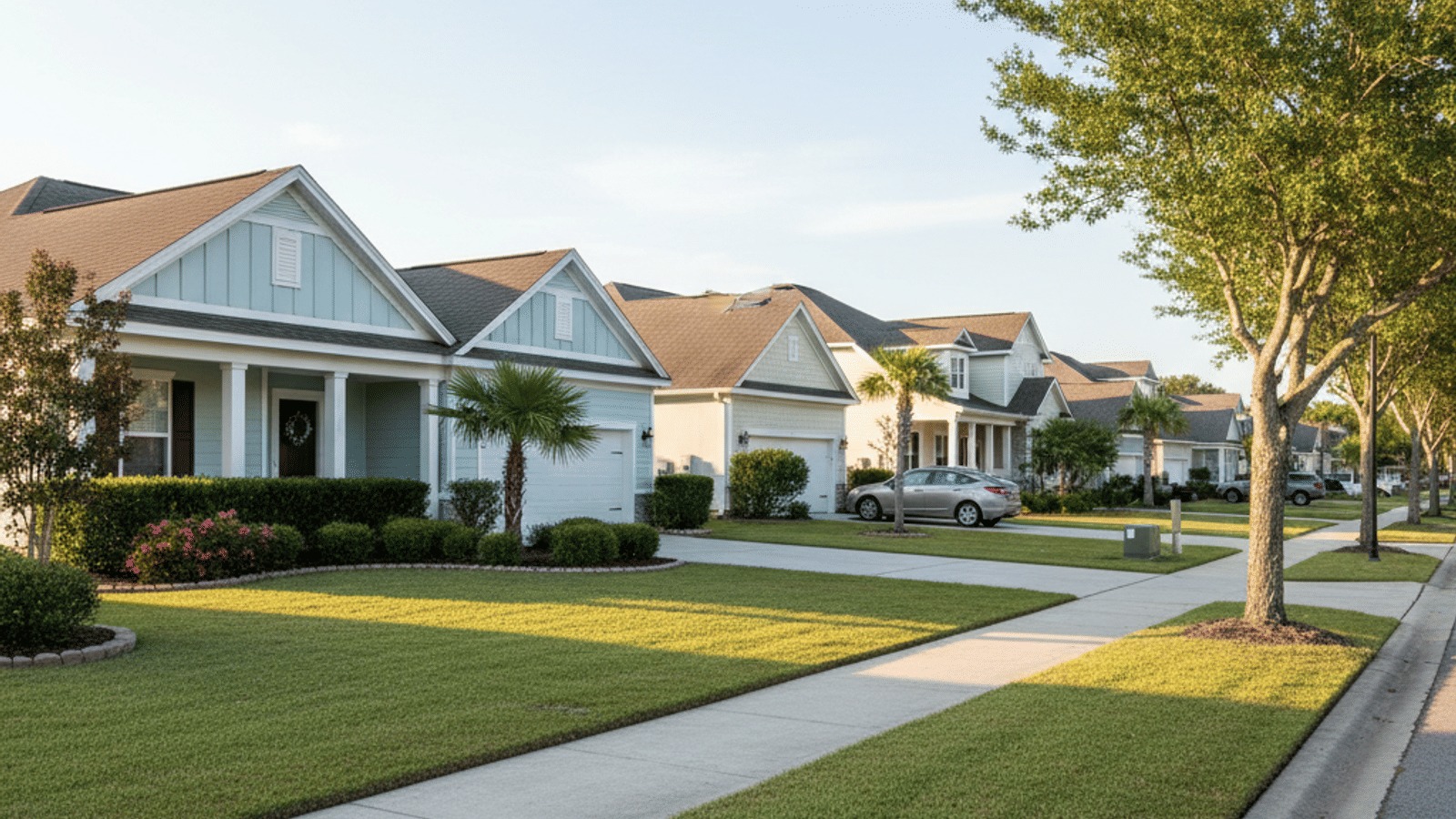
If you’ve been looking at real estate in Northeast Florida, you probably already know the headline: Jacksonville offers an incredible quality of life for a much lower price tag than Miami or Tampa. It is a major reason why so many people are moving here. But there is a catch that often catches buyers off guard, and it usually happens right when they sit down to calculate their monthly budget.
That catch is the Homeowners Association (HOA) fee.
While the purchase price of a home might look attractive, the cost of living in Jacksonville FL isn’t just about your mortgage principal and interest. It is about the total monthly output. In some neighborhoods, specifically luxury condos or amenity-rich master-planned communities, HOA fees can rival the cost of a small mortgage payment. We aren't talking about twenty bucks for a holiday party fund. In 2026, fees can range from a nominal $50 a year in older neighborhoods to over $2,000 a month in premier high-rises.
To make things even more complex, Florida has a unique "hidden" cost called a CDD fee that often runs parallel to your HOA dues. If you aren't careful, you might think you are getting a deal on a low HOA, only to find a hefty CDD line item on your tax bill. Let’s break down exactly what you need to know so you can budget smarter when buying a home in Jacksonville.
Average HOA Fees in Jacksonville FL (2026 Ranges)
When you are browsing listings, it is easy to get confused because the fees vary so wildly from one property type to another. You can't really apply a "rule of thumb" across the board. A sprawling estate in a gated community and a riverfront condo have completely different financial structures.
Here is a realistic look at what buyers are seeing in the market right now.
Single-Family Homes
For most standalone houses, fees are actually quite reasonable. In many standard subdivisions, you might pay somewhere between $50 and $150 per month. In some older, non-gated communities, it might even be as low as $50 to $300 per year. Generally, if you are looking at single-family homes Jacksonville has to offer, the fee is just covering common area landscaping, maybe a small playground, and the management company. If you step up to a gated luxury community, expect that number to jump to cover the 24-hour guard service.
Townhomes
Townhomes sit in the middle ground. Because the association is usually responsible for the roof and the exterior siding, your fees will naturally be higher than a single-family home. You should budget between $200 and $350 per month. This often feels like a sweet spot for buyers who want lower maintenance without the higher costs associated with large condo buildings.
Condos
This is where the numbers start to climb, and for good reason. Condo fees in 2026 generally range from $400 to over $800 per month. This isn't just for the pool; it covers the master insurance policy for the building exterior, which has become much more expensive in Florida recently. If you see Jacksonville condos for sale with fees under $300, look closely - it might mean the association is underfunded or the building has very few amenities.
Luxury High-Rises
If you are eyeing a unit with skyline views, concierge service, and resort-style pools, you are looking at the top tier. Fees here typically run from $900 to $2,100+ per month. It sounds steep, but these buildings function almost like hotels. You are paying for staff, elevators, parking garages, and significant reserves to maintain a massive concrete structure in a humid, salt-air climate.
What Do Your Fees Actually Cover?
A common frustration we hear is, "Why am I paying this money every month? It feels like rent." It is a fair emotional reaction, but logically, that money is usually buying you services you would have to pay for anyway - or providing insurance against future disasters.
The Value Exchange
In a standard single-family neighborhood, your dues are mostly about aesthetics and access. You are paying to keep the entry gates working, the retention ponds from becoming swamps, and the grass in the common areas cut. It ensures the neighborhood looks crisp, which helps protect your resale value.
For condos and townhomes, the value proposition is different. These are often "walls-out" policies. That means your monthly check covers the roof, the siding, the exterior painting, and often your water, sewer, and trash bills. Perhaps the biggest value add is the master insurance policy. If a hurricane damages the roof of a single-family home, the owner pays the deductible. In a condo, the association's policy handles the exterior repairs.
The Luxury Lifestyle
At the higher end, you are buying time and convenience. When you look at luxury properties, those high fees are funding:
- 24/7 Concierge and valet services.
- High-speed elevators and secure parking garages.
- Private amenities like boat slips, elaborate clubhouses, and fitness centers that rival commercial gyms.
The Critical "Reserve Fund"
Part of every responsible HOA fee goes into a "reserve fund." Think of this as the community's savings account for inevitable big-ticket items. Roofs eventually need replacing. Parking lots need repaving. Elevators need modernizing.
If an HOA doesn't charge enough to fund these reserves, they look cheap on paper today. But when the roof leaks in five years, every homeowner gets hit with a "Special Assessment" - a mandatory bill that can be $10,000 or more due immediately. Paying a higher monthly fee that properly funds reserves is often safer than betting on a low-fee community that has zero savings.
The Florida Factor: HOA vs. CDD Fees Explained
If you are relocating from outside Florida, you might never have heard of a CDD. This is one of the most confusing aspects of our local market, but understanding it is crucial to avoiding monthly budget surprises.
A CDD (Community Development District) fee is distinct from an HOA fee. While the HOA pays for the day-to-day operation of the neighborhood (rules, minor maintenance), the CDD fee pays for the massive infrastructure that built the community in the first place.
How CDDs Work
When a developer builds a massive master-planned community (like Nocatee or Bartram Park), they take out a bond to pay for the roads, sewer lines, big amenity centers, and water parks. They pass the cost of repaying that bond on to the homeowners.
Here is the kicker: You usually don't pay the CDD fee to a management company. It typically appears as a line item on your annual property tax bill.
The "Double Dip"
In many of our most popular communities, you will pay both. For example, if you look at Nocatee homes for sale, you might see a relatively low monthly HOA fee (maybe $80 - $100). That looks great! But then you check the tax bill and see a CDD fee of $2,400+ per year.
When you do the math, that CDD adds about $200 a month to your housing cost, even though it's paid annually.
The Good News
The bond portion of a CDD fee has an expiration date. It is usually a 20 or 30-year bond. Once it is paid off, that portion of the fee disappears from your tax bill, leaving only a smaller "Operations & Maintenance" (O&M) portion to keep the amenities running. It is always smart to ask how many years are left on the CDD bond before you buy.
Real-World Examples: High vs. Low Fee Communities
Let's put some real names to these numbers so you can visualize the differences across town.
Low/No Fee Areas
If you want to avoid fees entirely, you should focus on established neighborhoods like San Marco real estate or non-gated sections of Mandarin. Many of these homes have voluntary associations ($50/year for a neighborhood BBQ) or no association at all. You have total freedom, but you are also responsible for all your own maintenance and security.
Mid-Range Townhomes
Communities like Secret Cove near Tinseltown offer a great middle ground. You might find townhomes here with fees around $300 per month. That fee covers your exterior maintenance, two pools, and tennis courts. It’s a predictable cost for a "lock and leave" lifestyle.
Master-Planned Communities
Consider the Nocatee community or Julington Creek Plantation. These areas offer incredible amenities—water parks, zip lines, kayak launches. The combined cost of your HOA (low monthly) and CDD (high annual) often averages out to $300 - $400 per month. For families who use the pools every weekend, it is a bargain compared to joining a private club.
Luxury Condos
On the high end, look at buildings like The Peninsula or San Marco Place on the Southbank.
- The Peninsula: Fees can range from $1,100 to over $2,100 per month. You get 24-hour concierge, a spa, a coffee bar, and valet.
- San Marco Place: Slightly lower, ranging from $765 to $1,400 per month, but still offering robust security and amenities.
Why Are Florida HOA Fees Rising in 2026?
If you are looking at listings and noticing that fees seem higher than they were a few years ago, you aren't imagining it. We are seeing a statewide trend of rising association costs. There are three main drivers for this.
The Insurance Crisis
This is the big one. Insurance premiums for condominium associations in Florida have skyrocketed—some seeing increases of over 50-70% in just a few years. Since the master insurance policy is usually the largest line item in an HOA budget, when premiums go up, your monthly dues have to follow.
Structural Safety Regulations
Following the tragic Surfside condo collapse in Miami, Florida passed strict new laws regarding building safety. For buildings three stories or higher, associations can no longer waive funding their reserves. They must have fully funded reserves for structural integrity items like roofs and foundations.
For years, many older condos kept fees artificially low by voting to waive these savings. That is no longer legal. As a result, many older buildings are playing catch-up, leading to significant fee hikes to comply with the law.
Inflation and Labor
Simple inflation plays a role too. The cost of pool chemicals, landscaping crews, and security personnel has gone up. If the HOA has to pay the landscaping company 20% more than they did three years ago, that cost is passed directly to the homeowners.
Pro Tip: Always ask to see the "financials" and the "reserve study" before you buy. You want to ensure the HOA is financially healthy so you don't get hit with a surprise bill later.
Is an HOA Worth It? Pros and Cons for Jacksonville Buyers
So, is it worth paying that extra few hundred dollars a month? There is no right answer, only the right answer for your lifestyle.
The Pros
- Property Value Protection: An HOA prevents your neighbor from painting their house neon purple or parking a rusted boat on the front lawn. This protects your investment.
- Amenities: You get access to gyms, pools, and clubhouses that would cost thousands to install and maintain yourself.
- Low Maintenance: In condos and townhomes, you never have to worry about replacing a roof or painting the siding.
The Cons
- Budget Drain: It is a fixed monthly cost that never goes away, even after your mortgage is paid off.
- Loss of Freedom: If you want to build a shed or change your front door color, you have to ask for permission.
- Foreclosure Risk: In Florida, if you fall behind on HOA dues, the association has the power to place a lien on your home and eventually foreclose, sometimes faster than the bank.
FAQ: Common Questions About Jacksonville HOA Fees
Are HOA fees included in the mortgage payment?
No, typically they are not. Your lender will look at the HOA fee to calculate your Debt-to-Income (DTI) ratio to see if you qualify for the loan, but the payment itself is usually separate. You pay your mortgage to the bank and your HOA fee directly to the association or management company.
Can HOA fees go up in Florida?
Yes. There is generally no cap on how much an HOA can raise fees if the budget requires it. If insurance costs double, the board has the fiduciary duty to raise assessments to cover that cost. This is why checking the association's history of increases is a smart due diligence step.
What happens if you refuse to pay HOA fees in Florida?
Florida laws are very strong in favor of HOAs. If you stop paying, the association can restrict your access to common areas (like the pool) and place a lien on your property. If the debt remains unpaid, they can foreclose on your home to recover the money.
How do I find out the HOA fees for a specific house?
The most reliable way is to look at the MLS listing provided by a Realtor. However, listings can sometimes be outdated or inaccurate. During your "inspection period," you should formally request the "Estoppel letter" or current budget from the association to confirm exactly what the current monthly or annual dues are.
Check out this article next