

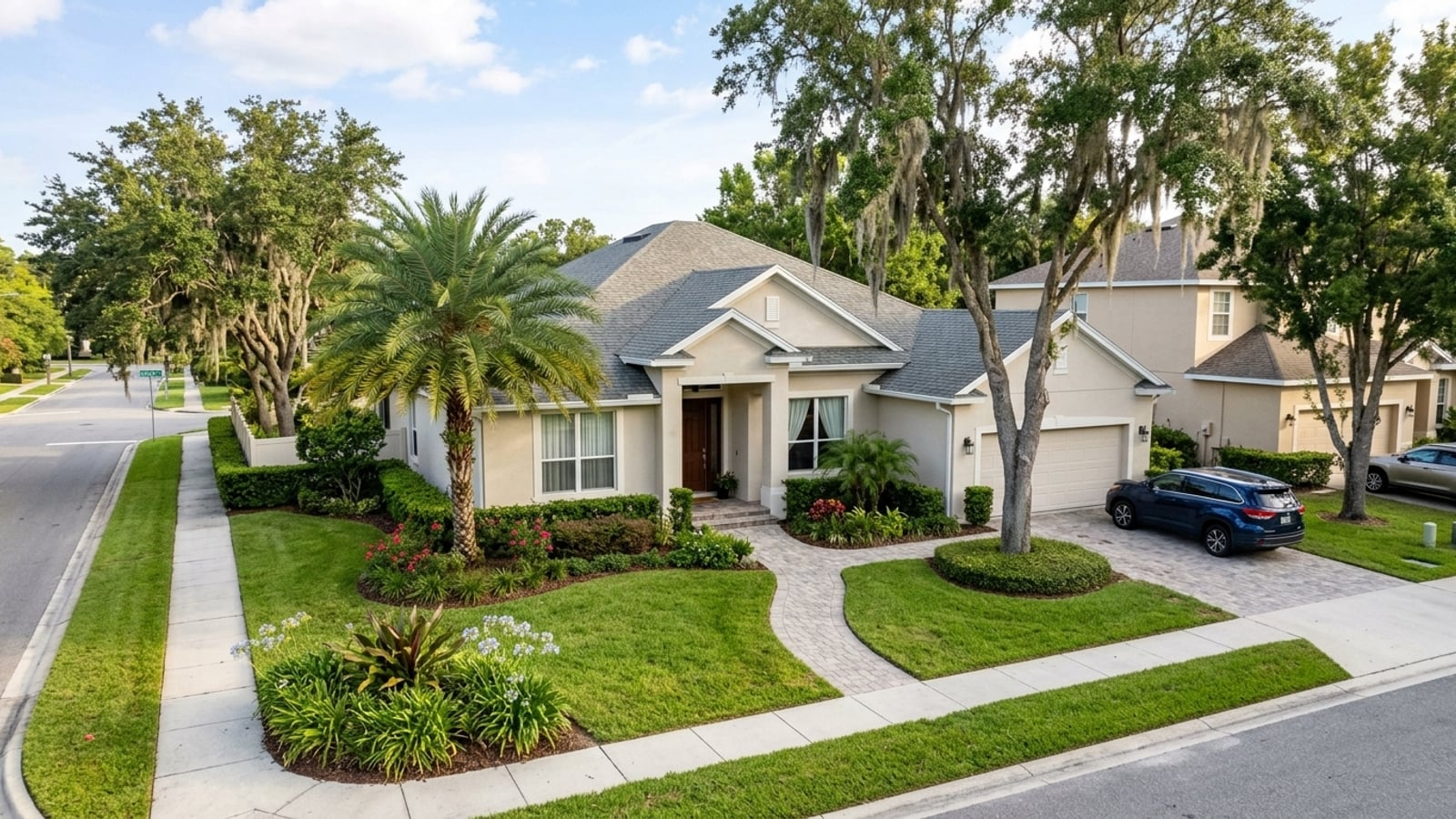
Jacksonville’s median sale price sits around $308,890, and homes spend roughly 57 days on the market. With over 4,500 available homes in inventory right now, anyone selling a home in Jacksonville is competing for buyer attention in a way that directly affects what they walk away with at closing.
Buyers in Northeast Florida have choices. That means your house needs to land well the moment someone clicks on the listing photo – because if it doesn’t, they’re already on to the next one. Staging is how you give buyers the mental space to picture themselves living there, and it consistently translates into better offers and shorter time on market.
Why You Should Stage Your House Before Selling
The 2025 Profile of Home Staging from the National Association of Realtors found that 49% of sellers’ agents observed staging reducing a property’s time on the market. Another 29% of agents reported that staging led to a 1% to 10% increase in the dollar amount offered by buyers. Those aren’t huge numbers on their own, but in a market sitting at a 97.5% sale-to-list ratio, every point matters.
A well-prepared house photographs better and feels more inviting during showings. Buyers want to focus on the layout and the light – not your family photos or the furniture arrangement you’ve lived with for a decade.
Does staging help homes sell faster?
With Jacksonville homes averaging 57 days on the market, most sellers want to cut that number down. The NAR data shows staging helps by making a property stand out before a buyer ever schedules a tour.
People scroll through dozens of listings before deciding which ones are worth their Saturday afternoon. Staged homes stop that scroll. More foot traffic, more interest, better odds of landing a buyer quickly.
How staging changes buyer perception
Staging shifts a buyer’s attention from how you live in the house to how they could. Arrange the furniture to show off a room’s size and purpose, and suddenly that third bedroom stops being a home office with your stuff in it and starts being a guest room with real potential.
The NAR report points to living rooms, primary bedrooms, and dining rooms as the most frequently staged areas – and for good reason. Those are the spaces buyers emotionally connect with first.
What to Budget for Staging a House in Northeast Florida
Local pricing varies more than you’d expect. One Jacksonville-focused review site puts a typical range at $100 to $1,000, while another cites a consultation fee of $150 to $600, with full staging running $2,000 to $6,000 depending on the scope.
Nationally, the NAR reported a median cost of $1,500 for professional staging services, compared to $500 for homes staged by agents. Get quotes from a few local providers before committing – what’s typical for a 1,400-square-foot condo isn’t the same as a 3,000-square-foot home in the Southside.
Professional staging price ranges
Jacksonville companies structure their pricing differently. Transform-US advertises services starting at $150, with half-day or full-day design sessions ranging from $500 to $1,500.
Interiors Revitalized, which serves Jacksonville and St. Augustine, charges $90 per hour for design services. That hourly model works well if you want professional direction but plan to do the actual execution yourself.
Vacant versus occupied staging costs
Empty houses cost more to stage because the company has to supply, deliver, and later remove all the furniture. Nationally, vacant homes average around $2,000 or more to stage. Occupied homes run closer to $800 on average, since the stager works with your existing pieces and supplements with rented accents.
Locally, Rave Reviews Home Staging in Orange Park quotes vacant staging at approximately 1.5% of the list price with a $2,500 minimum. For occupied homes, their minimum drops to $495. Transform-US prices vacant staging at about 1% of the first $200,000 of the list price, plus 0.5% of the remainder.
Deciding Between Professional and Do-It-Yourself Staging
Hiring a professional brings an outside eye and access to a full inventory of modern furniture. It also costs money upfront. Doing it yourself works – genuinely – if you already own neutral, appropriately scaled furniture and you’re willing to put in the time.
The honest answer is that most sellers need a little of both. Your agent can walk the property with you and tell you where a professional would actually move the needle versus where you can handle it yourself.
When hiring a professional makes sense
Vacant properties are almost always worth the investment. Empty rooms photograph small and feel cold – neither of which helps you. For luxury listings where buyers expect high-end furnishings, a professional stager isn’t optional.
They also understand scale, lighting, and flow in ways most homeowners don’t have reason to develop. An awkward floor plan that confuses buyers can often be fixed with the right furniture placement – but you have to know what you’re doing.
A realtor-approved do-it-yourself checklist
Start by pulling excess furniture out of the rooms. A few well-chosen pieces make a space feel larger than one that’s packed with oversized sofas and bulky cabinets.
Then work through this before you call the photographer:
- Pack away family photos, personal collections, and daily clutter.
- Clean everything – windows, baseboards, carpets. All of it.
- Open the blinds and replace any burnt-out bulbs with warm, bright options.
- Add simple fresh touches: clean towels in the bathrooms, a bowl of fruit in the kitchen.
Room-by-Room Staging Advice for Local Sellers
The NAR found that 91% of staged homes focused on the living room – so if you’re only going to put energy into one space, that’s the one. Buyers need to see somewhere they can actually relax and entertain.
After that, the primary bedroom comes in at 83% and the dining room at 69%. Those three rooms are where your time and money will do the most work.
Preparing the living room and kitchen
Pull seating slightly away from the walls to create a real conversation area rather than a room that looks like a waiting room. Clear the coffee table and the mantel down to a couple of simple pieces – a plant, a book stack, nothing that draws attention to itself.
In the kitchen, clear the countertops almost completely. Hide the small appliances, scrub the sink, and organize the pantry. Buyers open those doors. They’re checking storage capacity, and they notice when it’s chaos.
Setting up the primary bedroom and bathrooms
The primary bedroom should feel calm. Neutral bedding, full pillows, clear nightstands. That’s it. You’re not decorating – you’re removing distractions.
Bathrooms need a deep clean and almost nothing on the surfaces. Put the toiletries away, hang crisp white towels, swap in a new shower curtain if the old one has seen better days. Small investment, noticeable result.
Handling an Occupied Home versus a Vacant Listing
Living in a house while it’s listed is a real logistical challenge. You’re essentially maintaining a show-ready space around your daily life, which takes planning and daily discipline.
Vacant homes sidestep the maintenance problem but create a different one – empty rooms can feel cold and uninviting, and they rarely photograph well. Your approach depends entirely on which situation you’re in.
Staging while you still live in the house
The goal is to thin things out enough that the house feels spacious rather than lived-in. Renting a storage unit for out-of-season clothing, extra furniture, and decor you don’t need helps more than most sellers expect. Once the visual clutter is gone, everything else gets easier.
Build a short daily routine – make the beds, wipe the counters, sweep the floors – so you’re not scrambling when a showing request comes in at the last minute.
Using virtual staging for an empty property
Virtual staging digitally places furniture and decor into photos of empty rooms. It gives buyers something to look at when they’re scrolling listings and helps them understand how a space could actually function.
It’s a cost-effective marketing tool, and it’s worth using. But it doesn’t replace what buyers experience when they walk through a vacant house in person. Think of it as a good first impression online – not a substitute for the real thing.
Trusted Home Stagers Serving the Jacksonville Area
Northeast Florida has several experienced staging companies working across different price points and property types. Reviewing portfolios and talking to a few providers before you commit is worth the time.
Ask upfront about pricing structure, installation timelines, and what happens to the furniture rental if your home takes longer to sell than expected. A stager who can’t answer those questions clearly is a red flag.
What to look for in local staging companies
Find someone who has worked on homes similar to yours in price range and style. A company that primarily does beachfront vacation rentals may not be the right fit for a traditional suburban listing.
Read the reviews and ask your agent who they’d actually call. Agents work alongside local stagers regularly and know who shows up on time, communicates well, and delivers what they promise.
Verified staging professionals to consider
Transform-US, based in Jacksonville since 2004, is run by an ASID interior designer and offers both consultations and full staging packages. Linden Creek Jacksonville handles luxury home staging and interior design for vacant and occupied properties across the Beaches and Northeast Florida.
Modern Florida Home Staging LLC covers vacant, occupied, and vacation rental staging in Jacksonville, Fernandina Beach, and St. Augustine. Interiors Revitalized, led by Christy McCarthy, serves Jacksonville, Ponte Vedra, and surrounding areas with hourly design services.
Home Staging FAQs
Does home staging help sell a house faster in Jacksonville?
Yes. The 2025 NAR Profile of Home Staging found that 49% of sellers’ agents observed staging reducing a property’s time on the market. In a market where homes average 57 days on the market, anything that helps your listing stand out earlier in that window is worth taking seriously.
How much does it cost to stage a house in Jacksonville?
It depends on whether the home is empty and how much work it needs. A consultation runs $150 to $600, and full staging can range from $2,000 to $6,000 depending on square footage. Local companies like Transform-US offer design sessions starting at $500 to $1,500.
What’s the difference between hiring a professional stager and DIY staging?
A professional brings in their own furniture inventory and handles design, delivery, and setup. DIY relies on what you already own – decluttering, cleaning, and rearranging your existing belongings. The NAR puts the median cost of professional services at $1,500, compared to $500 for agent-assisted or DIY efforts.
What should I avoid doing when staging my house?
Don’t leave personal items, family photos, or daily clutter out during showings. Don’t push all your furniture against the walls – it makes rooms feel boxy, not spacious. And don’t underinvest in the primary bedroom and living room; those are the spaces buyers care about most.
How should I stage a house I’m still living in vs. an empty one?
If you’re still in the house, the focus is on decluttering, removing bulky furniture, and keeping everything spotless for daily showings. If the house is vacant, bring in rented furniture – empty rooms tend to look smaller and feel unwelcoming, which hurts you both online and in person.
What is virtual staging, and is it enough for my listing in Jacksonville?
Virtual staging digitally adds furniture to photos of empty rooms to improve how the listing looks online. It helps buyers picture the space before they visit, but they’ll still walk through an empty house during a tour. It’s a useful marketing tool – just not a replacement for physical staging.
How long does home staging take before I can list my Jacksonville home?
That depends on your approach. A professional stager can often complete a consultation and install furniture within a few days to a week, depending on their schedule. DIY staging moves at whatever pace you can declutter, clean, and pack away your belongings – which varies a lot from seller to seller.
Getting Started With a Listing Consultation
Preparing a house for the market starts with an honest look at what’s actually there. A listing consultation gives you specific, actionable direction on what to fix, what to pack, and what to leave exactly as it is.
Jacksonville’s average sale-to-list ratio sits at 97.5%, which means pricing and presentation both have to be right to get the most out of your sale. A local agent ties the staging strategy into the broader marketing plan so the two work together instead of independently.
What happens during a staging walkthrough
Your agent or stager will move through every room from a buyer’s point of view – noting what needs to go, what should be rearranged, and which minor repairs would actually make a difference. You’ll walk away with a prioritized task list, not a vague suggestion to “freshen things up.”
That list is what keeps you from spending three weekends on things that don’t matter while missing the two things that do.
Connecting with the right local professionals
Your agent can connect you directly with trusted staging companies, cleaners, and contractors in Northeast Florida. Using that network saves you the time of vetting strangers from a Google search.
Once the house is staged and photographed, it’s ready to compete. A well-prepared listing attracts more buyers – and that’s the whole point.